
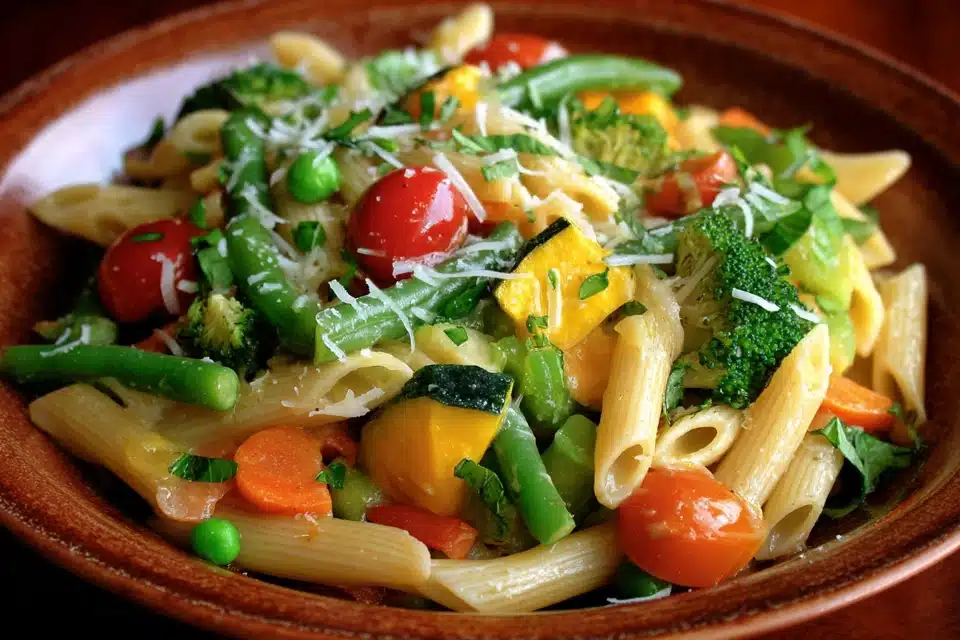
Classic Pasta Primavera – A Colorful, Fresh, and Easy Pasta Dish
Introduction
Classic Pasta Primavera is the celebration of spring and summer in a bowl — a vibrant medley of fresh vegetables tossed with al dente pasta and a light garlic-Parmesan sauce. Though the name “primavera” means spring in Italian, this dish is a modern American classic that originated in the 1970s and quickly became a favorite for its healthy, veggie-forward appeal.
It’s light yet satisfying, easy to make, and endlessly customizable based on what’s in season or in your fridge. Whether served as a meatless main or a colorful side dish, pasta primavera is a timeless recipe full of flavor, color, and wholesome comfort.
Ingredients Overview
Pasta
- Pasta Types: Fettuccine, penne, farfalle, or spaghetti work well. The key is a pasta shape that holds sauce and veggie bites evenly.
- Salted Water: Always season your pasta water generously for the best flavor.
Vegetables
A traditional primavera includes a variety of seasonal vegetables. You can mix and match based on your taste or availability:
- Bell Peppers (red, yellow, or orange): Sweet, colorful, and quick to sauté.
- Zucchini and Yellow Squash: Mild and tender when sautéed or roasted.
- Broccoli or Broccolini: Adds texture and earthiness.
- Cherry Tomatoes: Bursts of juicy sweetness.
- Carrots: Add a pop of color and slight crunch.
- Snap Peas or Asparagus: Light, crisp, and springy.
Aromatics and Sauce
- Garlic: Adds depth and aroma.
- Olive Oil: A light, flavorful base to sauté the veggies.
- Lemon Zest and Juice: Brightens the dish and balances flavors.
- Parmesan Cheese: Adds salty richness — fresh-grated is best.
- Butter (Optional): For extra silkiness in the sauce.
- Fresh Basil or Parsley: A burst of herbal freshness to finish.
Ingredient Tips & Substitutions
- Whole Wheat or Gluten-Free Pasta: Works well for dietary needs.
- Vegan Version: Skip cheese and butter, or use dairy-free alternatives.
- Add Protein: Grilled chicken, shrimp, or chickpeas complement the vegetables beautifully.
- Creamy Version: Stir in a splash of cream or cashew cream for a richer texture.
Step-by-Step Instructions
1. Cook the Pasta
Bring a large pot of salted water to a boil. Cook pasta until just al dente, according to package instructions. Reserve 1 cup of pasta water, then drain and set aside.
2. Prepare the Vegetables
While the pasta cooks, prep your vegetables: slice zucchini, carrots, and bell peppers into thin strips; halve the cherry tomatoes; trim and chop broccoli or snap peas.
3. Sauté the Vegetables
In a large skillet or sauté pan, heat 2–3 tablespoons olive oil over medium heat. Add vegetables in stages:
- Start with harder vegetables like carrots and broccoli; sauté 3–4 minutes.
- Add zucchini, bell peppers, and snap peas; cook another 3–5 minutes.
- Stir in cherry tomatoes and garlic; cook until fragrant, about 1 minute.
Season with salt and pepper. The vegetables should be tender-crisp and colorful, not mushy.
4. Add Pasta and Finish the Sauce
Add cooked pasta directly to the skillet with the veggies. Toss everything together, adding:
- Zest of 1 lemon
- Juice of 1/2 lemon
- 1/2 cup grated Parmesan cheese
- 1–2 tablespoons butter (optional)
- A splash of reserved pasta water, as needed, to loosen the sauce
Toss until everything is coated and glossy.
5. Serve
Serve hot, garnished with fresh basil, more Parmesan, and a crack of black pepper.
Tips, Variations & Substitutions
- Roasted Veggies Version: Roast vegetables in the oven for deeper flavor, then toss with pasta.
- Creamy Primavera: Add 1/4 cup cream or mascarpone cheese to the sauce.
- Spicy Twist: Add a pinch of crushed red pepper flakes to the sautéed garlic.
- Cheese Lovers: Add crumbled goat cheese or ricotta on top before serving.
Serving Ideas & Occasions
Pasta primavera is ideal for:
- Light vegetarian dinners
- Summer cookouts or potlucks
- Meal prep lunches
- Meatless Monday menus
Serve with:
- Garlic bread or focaccia
- Crisp arugula or mixed greens salad
- Grilled chicken or shrimp for added protein
Its fresh, colorful presentation also makes it perfect for entertaining.
Nutritional & Health Notes
This dish is naturally:
- Vegetarian
- Rich in fiber, vitamins, and antioxidants
- Balanced with carbs, healthy fats, and plant-based nutrients
To make it lighter or allergy-friendly:
- Use whole grain or legume-based pasta
- Omit butter or cheese for dairy-free
- Bulk up with more non-starchy vegetables
FAQs
Q1: Can I use frozen vegetables?
A1: Yes, but thaw and pat dry first to avoid watering down the dish. Add near the end of cooking.
Q2: What’s the best pasta for primavera?
A2: Fettuccine, penne, or farfalle work great. Choose a shape that holds sauce and veggie bites evenly.
Q3: Can I make this vegan?
A3: Absolutely. Skip the cheese and butter, or substitute with vegan Parmesan or nutritional yeast.
Q4: How do I reheat leftovers?
A4: Gently reheat in a skillet with a splash of water or broth to refresh the sauce without drying out the pasta.
Q5: Can I prep this in advance?
A5: Yes. Chop vegetables and cook pasta ahead of time. Store separately and combine when ready to serve.
Q6: What can I add for more protein?
A6: Try grilled chicken, sautéed shrimp, chickpeas, or white beans.
Q7: Is this dish gluten-free?
A7: Use certified gluten-free pasta to make the entire meal gluten-free.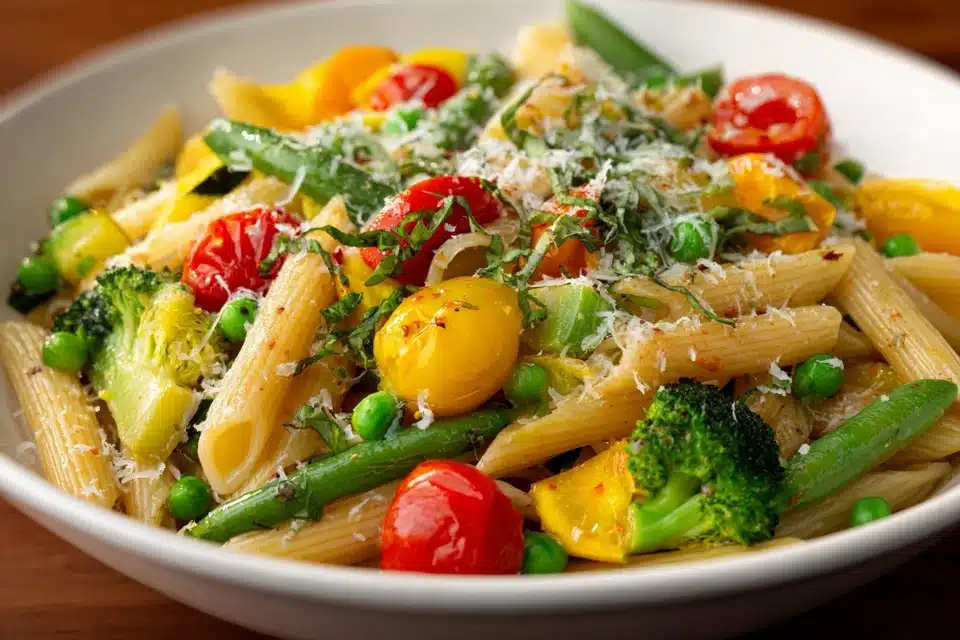
Classic Pasta Primavera – Fresh Spring Veggie Recipe
A fresh, veggie-packed pasta dish tossed with garlic, olive oil, lemon, and Parmesan — light, colorful, and bursting with seasonal flavor.
- Prep Time: 15 minutes
- Cook Time: 20 minutes
- Total Time: 35 minutes
- Yield: 4 servings 1x
Ingredients
- 12 oz pasta (penne, fettuccine, or farfalle)
- 2 tbsp olive oil
- 1 bell pepper, sliced
- 1 zucchini, sliced
- 1 yellow squash, sliced
- 1 cup broccoli florets
- 1/2 cup cherry tomatoes, halved
- 1 carrot, peeled and julienned
- 3 cloves garlic, minced
- Zest and juice of 1 lemon
- 1/2 cup Parmesan cheese
- Salt and pepper to taste
- 1–2 tbsp butter (optional)
- Fresh basil or parsley for garnish
- Reserved pasta water as needed
Instructions
- Cook pasta in salted water until al dente. Reserve 1 cup pasta water, then drain.
- Sauté vegetables in olive oil, starting with harder ones like carrots and broccoli, then softer ones like squash and tomatoes.
- Add garlic and cook until fragrant.
- Toss in cooked pasta, lemon zest, juice, Parmesan, butter (if using), and pasta water as needed.
- Season with salt and pepper. Garnish with herbs and more cheese. Serve hot.
Notes
- Use any seasonal vegetables you like.
- Add grilled protein or beans to make it a full meal.
- Leftovers keep well for up to 3 days.