
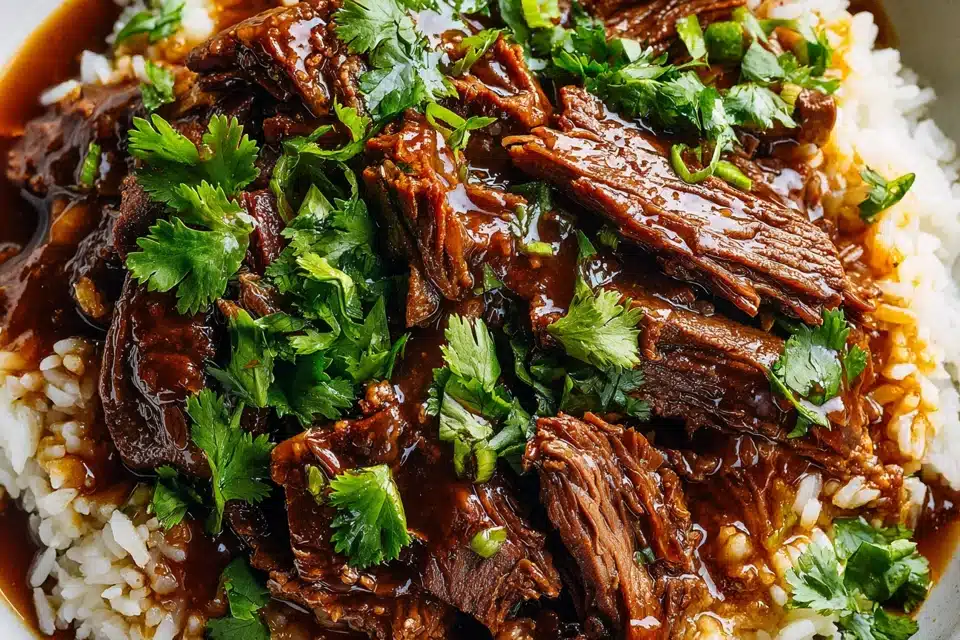
Korean Pot Roast – A Bold, Flavor-Infused Twist on a Classic
Introduction
Korean pot roast takes everything you love about the slow-cooked comfort of traditional pot roast and adds a bold, savory-sweet Korean flavor profile that makes it unforgettable. It’s tender, juicy beef simmered in a soy-based marinade with garlic, ginger, sesame, and gochujang — a Korean chili paste that delivers subtle heat and deep umami.
Inspired by both American pot roast and dishes like galbijjim (Korean braised short ribs), this fusion dish brings warmth and depth in every bite. It’s the kind of meal perfect for cozy Sundays, family gatherings, or anytime you want to fill your home with mouthwatering aromas.
Unlike a traditional pot roast served with gravy and potatoes, the Korean version is often paired with rice, kimchi, and vegetables, offering a lighter, balanced twist that’s just as comforting but full of vibrant flavor.
Ingredients Overview
This dish relies on layering flavor — each ingredient adds something special to the final result.
- Chuck Roast (3–4 lbs):
Well-marbled and perfect for slow cooking, chuck becomes fork-tender and soaks up the rich marinade. Brisket or short ribs can also be used. - Soy Sauce:
The salty umami base of the braising liquid. Use low-sodium to better control the saltiness of the dish. - Gochujang:
A fermented Korean chili paste with heat, sweetness, and complexity. It’s the backbone of the dish’s unique flavor. Can be found in most grocery stores or Asian markets. - Brown Sugar or Honey:
Balances out the salt and spice with a gentle sweetness. Dark brown sugar adds more depth; honey lends floral notes. - Garlic & Ginger:
Fresh garlic and ginger provide warmth, zing, and traditional Korean flavor. - Sesame Oil:
A small amount of toasted sesame oil gives the dish a nutty aroma that’s signature in Korean cooking. - Rice Vinegar or Mirin:
Adds a mild tang to brighten the sauce. Mirin also adds a slight sweetness. - Onion & Scallions:
Onion melts into the sauce, while scallions offer a burst of color and freshness just before serving. - Carrots & Daikon (optional):
Add root vegetables during the last hour of cooking to absorb flavor and add heartiness. - Beef Broth or Water:
Helps create the braising liquid and prevents the sauce from becoming too intense. - White Rice or Steamed Short-Grain Rice:
A must for serving. The rice soaks up the sauce and complements the richness of the beef.
Step-by-Step Instructions
- Prepare the Marinade:
In a bowl, whisk together ½ cup soy sauce, ¼ cup gochujang, 2 tablespoons brown sugar or honey, 1 tablespoon sesame oil, 1 tablespoon rice vinegar or mirin, 5 cloves minced garlic, and 1 tablespoon grated fresh ginger. Set aside. - Sear the Beef:
Pat the chuck roast dry with paper towels and season lightly with salt and pepper. In a large Dutch oven or heavy-bottomed pot, heat 1 tablespoon oil over medium-high heat. Sear the roast for 3–4 minutes per side until deep golden brown. Remove and set aside. - Sauté Aromatics:
In the same pot, add sliced onion and sauté for 3–4 minutes until softened. Add a splash of broth to deglaze the pot, scraping up any browned bits. - Add Sauce and Simmer:
Return the roast to the pot. Pour in the prepared Korean marinade along with 1 cup of beef broth or water. The liquid should come about halfway up the roast. - Slow Cook:
Cover with a lid and reduce heat to low. Simmer for 3–4 hours, flipping the roast halfway through, until the meat is fork-tender. You can also cook in a 325°F oven for the same amount of time or in a slow cooker on low for 8 hours. - Optional Veggies:
During the last hour, add large chunks of carrots and daikon. They’ll soften and absorb the flavorful sauce. - Shred & Serve:
Once tender, remove the roast and shred it into large chunks. Skim fat from the sauce if needed, then return the meat to the pot and stir to coat. - Garnish and Plate:
Serve hot over steamed rice. Garnish with sesame seeds, sliced scallions, and a side of kimchi or pickled veggies for contrast.
Tips, Variations & Substitutions
- Make It Spicy:
Add a spoonful of gochugaru (Korean red pepper flakes) or a diced chili to the sauce for more heat. - Slow Cooker Method:
After searing the meat, place everything in the slow cooker and cook on low for 8 hours or high for 4–5. - Instant Pot Version:
Pressure cook on high for 60–70 minutes with a natural release. This is a great way to get tenderness faster. - Vegetable Add-Ins:
Mushrooms, bok choy, or baby potatoes can be added for more variety. - No Gochujang?
Use a mix of chili paste, a little miso, and honey. While not exactly the same, it gives a similar profile. - Serve in Lettuce Wraps:
For a lighter dish, serve the shredded beef in butter lettuce leaves with rice and sauce.
Serving Ideas & Occasions
Korean pot roast is wonderfully versatile and pairs well with:
- Steamed White or Brown Rice:
Essential to catch every drop of the rich, savory sauce. - Kimchi or Pickled Vegetables:
The tang and crunch balance the richness of the meat. - Quick Cucumber Salad:
Sliced cucumbers tossed with rice vinegar, sesame oil, and a pinch of sugar. - Sautéed Greens:
Try garlic spinach, bok choy, or stir-fried kale.
It’s a beautiful dish to serve for:
- Sunday dinners
- Cold weather meals
- Casual dinner parties
- Korean-inspired family feasts
The aroma alone will draw everyone to the table.
Nutritional & Health Notes
This dish, while hearty, offers plenty of nutritional value:
- Protein-Rich:
Chuck roast is loaded with protein to keep you full and fueled. - Iron & B Vitamins:
Slow-cooked beef offers essential nutrients for energy and metabolism. - Healthier Choices:
Use low-sodium soy sauce and trim excess fat before cooking for a leaner version. - Balance with Veggies:
Serve with plenty of vegetables and rice for a well-rounded, nutrient-dense meal.
The sweetness and spice are balanced, making it approachable for many diets while staying true to Korean flavor profiles.
FAQs
Q1: Can I make Korean pot roast ahead of time?
A1: Absolutely. It tastes even better the next day as the flavors deepen. Store in an airtight container in the fridge for up to 4 days. Reheat gently on the stovetop or in the oven.
Q2: Can I freeze Korean pot roast?
A2: Yes, it freezes well. Let it cool completely, then store in freezer-safe bags or containers. Thaw overnight in the fridge and reheat on low with a splash of broth.
Q3: What if I don’t have gochujang?
A3: You can substitute with a mix of chili paste, miso, and honey. It won’t be quite the same but will still offer depth and heat.
Q4: How do I know when the roast is done?
A4: The meat should shred easily with a fork. If it’s still tough, it needs more time. Low and slow is key to tender results.
Q5: Is this dish gluten-free?
A5: Use gluten-free soy sauce (tamari) and check your gochujang label — some versions contain wheat. With the right ingredients, it can be made gluten-free.
Q6: Can I make this in an Instant Pot?
A6: Yes. Sear the meat first using the sauté function, then cook on high pressure for 60–70 minutes with a natural pressure release. The sauce may need thickening after cooking.
Q7: What cuts of beef can I use besides chuck?
A7: Brisket and boneless short ribs are great options. They have enough fat to stay juicy during long cooking and absorb flavor well.
Korean Pot Roast Dinner That Feels Extra Special

A tender, flavorful Korean-inspired pot roast infused with soy, gochujang, garlic, and sesame — perfect for serving over rice with kimchi and vegetables.
- Prep Time: 20 minutes
- Cook Time: 3–4 hours
- Total Time: 4 hours
- Yield: 6 servings 1x
Ingredients
- 3–4 lbs beef chuck roast
- ½ cup low-sodium soy sauce
- ¼ cup gochujang
- 2 tbsp brown sugar or honey
- 1 tbsp toasted sesame oil
- 1 tbsp rice vinegar or mirin
- 5 cloves garlic, minced
- 1 tbsp fresh ginger, grated
- 1 onion, sliced
- 1 cup beef broth or water
- Optional: 2 carrots, 1 daikon, peeled and chopped
- Salt and pepper, to taste
- 2 scallions, sliced (for garnish)
- Cooked white rice, for serving
Instructions
- Whisk together soy sauce, gochujang, sugar, sesame oil, vinegar, garlic, and ginger.
- Sear seasoned roast on all sides in a Dutch oven with oil until browned. Remove.
- Sauté onions, then deglaze with broth. Return roast to pot and pour sauce over.
- Cover and simmer on low for 3–4 hours, flipping once, until tender. Add vegetables during the last hour if using.
- Shred meat, skim fat, and return meat to sauce.
- Serve over rice with scallions and optional kimchi.
Notes
- Can be made in a slow cooker or pressure cooker.
- Adjust spice with more or less gochujang.
- Store leftovers for 4 days or freeze for up to 2 months.