
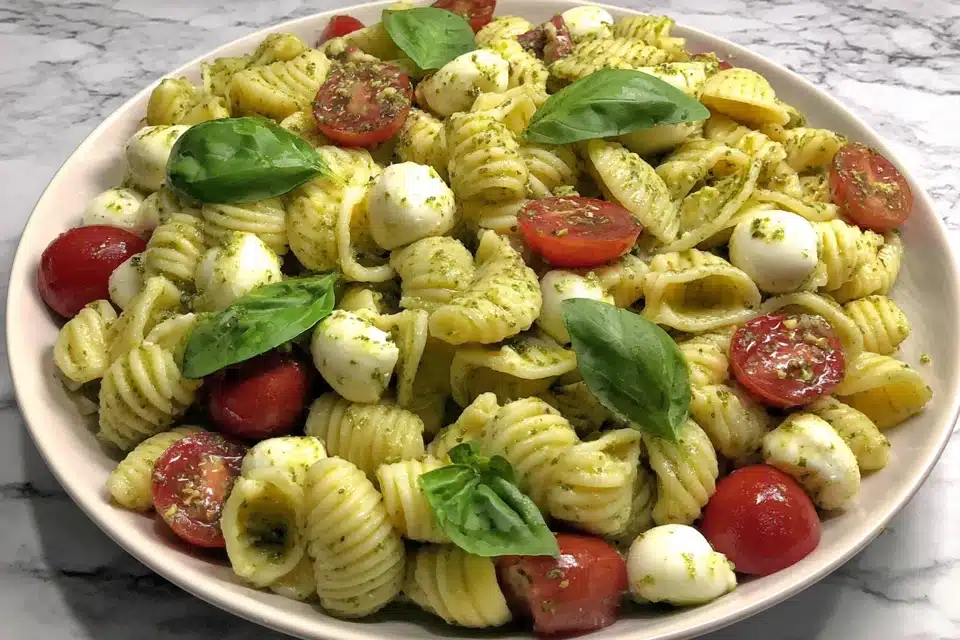
Pesto Pasta Salad – 5 Simple Fresh Delight
Pesto Pasta Salad is a vibrant dish that combines tender pasta with basil pesto, vegetables, and optional proteins for a balanced and flavorful cold meal. It is commonly served at gatherings, picnics, or as part of a prepared meal plan due to its refreshing taste and convenient preparation.
This salad highlights the rich herbal notes of pesto paired with the neutral base of pasta. The dressing coats each piece evenly, while vegetables contribute texture and color. The result is a cohesive dish with layers of flavor that develop after a short chilling period.
Pesto Pasta Salad works well as a main dish or side dish. It can be prepared in advance and stored in a cool environment, allowing the ingredients to absorb the dressing and settle into a well-blended combination.
Ingredients Overview
Pasta forms the foundation of this salad. Short shapes such as rotini, penne, or fusilli are commonly used because they hold pesto effectively and mix evenly with other ingredients. Cooking the pasta to an al dente texture helps preserve firmness after cooling and prevents a soft or mushy result.
Pesto is the primary flavor component. Traditional pesto includes basil, olive oil, garlic, pine nuts, and Parmesan cheese blended into a smooth sauce. Store-bought or homemade pesto can be used depending on preference. Its bold herbal flavor coats the pasta and ties the ingredients together.
Vegetables contribute freshness, texture, and color. Cherry tomatoes add juiciness and mild sweetness, while cucumbers provide a crisp bite. Bell peppers introduce a subtle crunch and visual contrast. Red onion adds a mild sharp note that balances the richness of the pesto.
Cheese is often included for additional flavor. Mozzarella cubes offer a soft, creamy texture, while Parmesan adds a salty, nutty element that enhances the pesto. Feta can also be used for a tangier profile.
Protein options such as grilled chicken, shrimp, or chickpeas can be added to increase the nutritional balance of the dish. These ingredients integrate well with the pesto and pasta, creating a more filling meal.
Fresh herbs may be added to reinforce the basil notes in the pesto. Ingredients such as parsley or extra basil leaves can be mixed in for added aroma and freshness.
Ingredients
12 ounces rotini or penne pasta
1 cup basil pesto
1 cup cherry tomatoes, halved
1 cup cucumber, diced
1/2 cup red bell pepper, diced
1/4 cup red onion, thinly sliced
1 cup mozzarella cheese, cubed
1/4 cup grated Parmesan cheese
2 tablespoons fresh basil, chopped
1 tablespoon olive oil
1/2 teaspoon salt
1/4 teaspoon black pepper
2 cups cooked chicken breast, diced (optional)
Step-by-Step Instructions
Bring a large pot of salted water to a boil. Add the pasta and cook according to package directions until it reaches an al dente texture. Stir occasionally to maintain even cooking and prevent sticking.
Drain the pasta and rinse under cold water to stop the cooking process. Allow it to cool fully and drain well so excess moisture does not dilute the pesto dressing.
Transfer the cooled pasta into a large mixing bowl. Add the pesto and olive oil, then toss until the pasta is evenly coated. The pesto should cling to each piece, creating a uniform layer of flavor.
Add the cherry tomatoes, cucumber, bell pepper, and red onion to the bowl. Mix gently to distribute the vegetables throughout the pasta without breaking their structure.
Incorporate the mozzarella cubes and Parmesan cheese. If using chicken, add it at this stage as well. Mix lightly to combine all components while maintaining texture.
Sprinkle chopped basil over the salad. Season with salt and black pepper, then toss again to distribute seasoning evenly.
Taste the mixture and adjust seasoning if needed. Additional pesto or olive oil can be added to achieve the desired consistency and flavor balance.
Cover the bowl and place it in a cool environment for at least one hour. This resting period allows the flavors to blend and the texture to settle.
Before serving, stir the salad gently to redistribute the pesto and ingredients. A small drizzle of olive oil can be added if the salad appears dry.
Tips, Variations & Substitutions
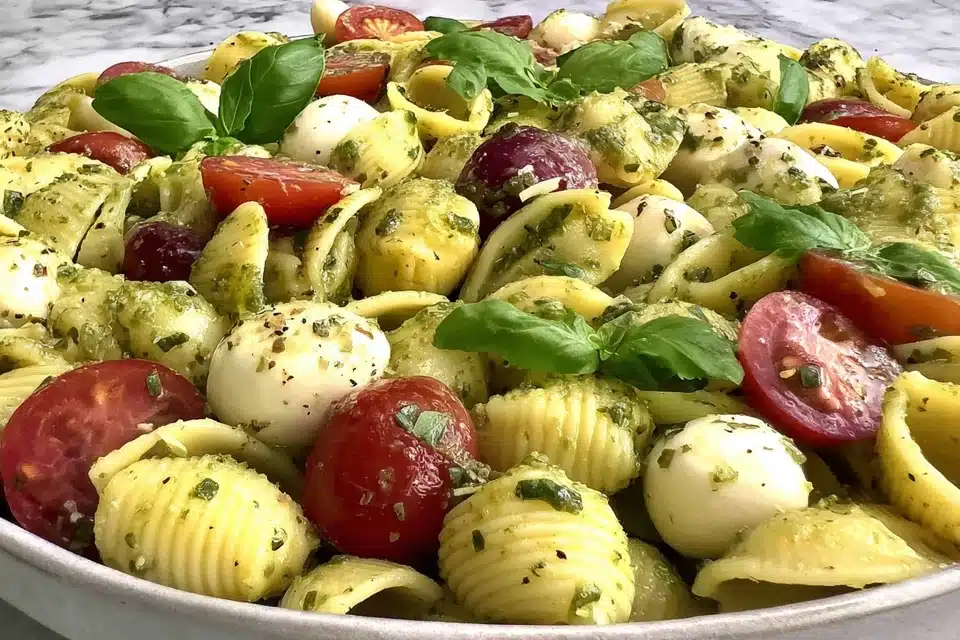
Cooking the pasta to the correct texture is important. Overcooked pasta may become too soft after mixing with pesto, while properly cooked pasta maintains structure and absorbs flavor without losing firmness.
Pesto consistency can vary depending on the type used. If the pesto appears thick, a small amount of olive oil can be mixed in to achieve a smoother coating. If too thin, additional Parmesan cheese can help thicken it.
Vegetables can be adjusted based on preference or availability. Ingredients such as spinach, zucchini, or artichoke hearts can be included for variation. Each addition should be cut into uniform pieces for consistent mixing.
Protein additions such as grilled chicken, shrimp, or chickpeas can be used to increase the substance of the salad. These options pair well with the basil flavor and integrate smoothly with the other ingredients.
Cheese variations are also possible. Feta cheese offers a tangy contrast, while burrata adds a creamy center. Each type of cheese contributes a different texture and flavor profile.
Fresh herbs can enhance the aroma of the dish. Additional basil leaves reinforce the pesto flavor, while parsley adds a lighter herbal note.
For preparation ahead of time, a small portion of pesto can be reserved and mixed in prior to serving. Pasta tends to absorb dressing during storage, so this helps maintain a balanced consistency.
Serving Ideas & Occasions
Pesto Pasta Salad is suitable as a main dish or side dish. It pairs well with grilled meats, roasted vegetables, or simple sandwiches. Its cool and refreshing nature complements a wide range of warm dishes.
This salad is often served at picnics, potlucks, and casual gatherings. It holds its structure well after chilling and can be portioned easily for group servings.
It also works well for meal preparation across several days. Stored properly, it can be enjoyed as a ready-to-eat option for lunches or light dinners.
Beverages such as sparkling water, iced tea, or citrus-based drinks pair well with the herbal and savory notes of the pesto.
Nutritional & Health Notes
Pesto Pasta Salad provides a balance of carbohydrates from pasta, fats from olive oil and pesto, and protein from optional additions such as chicken or cheese. This combination creates a filling and satisfying dish.
Vegetables contribute fiber, vitamins, and minerals while adding freshness and texture. Ingredients such as tomatoes and cucumbers also provide hydration.
Portion size and ingredient selection influence overall nutritional content. Reducing cheese or oil can lower fat levels, while increasing vegetables can improve fiber content.
Whole grain pasta can be used to increase fiber while maintaining structure. Plant-based protein such as chickpeas can replace meat for a vegetarian version.
FAQs
Can Pesto Pasta Salad be prepared in advance?
Yes, this salad can be prepared ahead and stored in a sealed container in a cool environment. It benefits from resting time, which allows the flavors to blend. Stir before serving and add a small amount of pesto or olive oil if the mixture appears dry.
What type of pesto works best?
Traditional basil pesto is most commonly used. Store-bought pesto offers convenience, while homemade pesto allows control over ingredients and flavor intensity. Both options integrate well with pasta and vegetables.
What pasta shapes are suitable?
Short pasta shapes such as rotini, penne, or fusilli are ideal. These shapes hold pesto effectively and mix evenly with vegetables and cheese. Long pasta is less suitable for this type of salad.
Can protein be added to this salad?
Yes, grilled chicken, shrimp, or chickpeas can be included. These ingredients increase the protein content and create a more complete meal while blending well with the pesto flavor.
How long does this pasta salad last?
When stored in a sealed container in a cool environment, the salad can last up to three days. Stir before serving, as the pesto may settle or be absorbed by the pasta over time.
Can different vegetables be used?
Yes, vegetables such as spinach, zucchini, or roasted peppers can be added. These ingredients introduce variety in texture and flavor while maintaining balance within the salad.
Should this salad be served cold?
Yes, pesto pasta salad is typically served cold or slightly chilled. Chilling allows the flavors to develop and improves the overall texture of the dish.
PrintPesto Pasta Salad with Pasta, Veggies, and Fresh Herbs
A fresh pesto pasta salad made with tender pasta, juicy tomatoes, mozzarella, and basil pesto for a flavorful cold dish.
- Prep Time: 15 minutes
- Cook Time: 10 minutes
- Total Time: 25 minutes
- Yield: 4 servings 1x
Ingredients
12 ounces rotini pasta
1 cup basil pesto
1 cup cherry tomatoes, halved
1 cup mozzarella balls or cubes
1/4 cup grated Parmesan
1/4 cup olive oil
1/2 teaspoon salt
1/4 teaspoon black pepper
2 tablespoons fresh basil, chopped
Instructions
- Cook pasta until al dente, then drain and cool under cold water.
- In a bowl, combine pasta with pesto and olive oil.
- Add tomatoes, mozzarella, and Parmesan.
- Toss gently to combine.
- Season with salt and pepper.
- Garnish with basil.
- Chill before serving.
Notes
Add extra pesto if needed after chilling.