
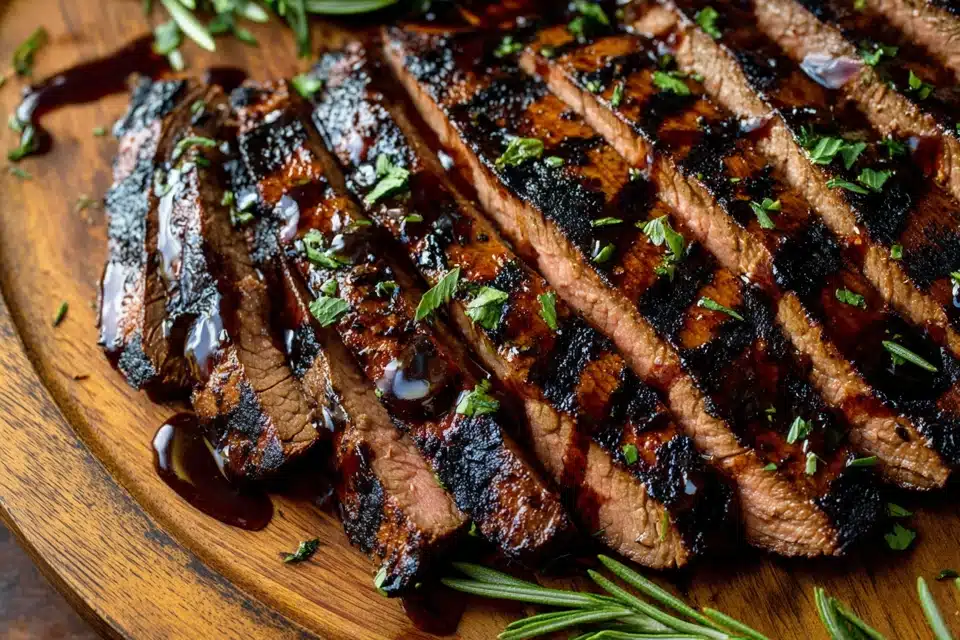
Balsamic Flank Steak 6 Bold Juicy Perfection
Introduction
Balsamic Flank Steak is a simple yet deeply flavorful dish that transforms a lean cut of beef into something tender, savory, and beautifully caramelized. The rich tang of balsamic vinegar penetrates the meat, enhancing its natural depth while adding subtle sweetness.
When grilled or seared at high heat, flank steak develops a flavorful crust while remaining juicy inside. The balsamic marinade reduces slightly during cooking, creating glossy edges and concentrated flavor.
Perfect for weeknight dinners or backyard gatherings, Balsamic Flank Steak pairs well with fresh salads, roasted vegetables, or warm bread. With just a handful of ingredients and proper technique, this dish delivers impressive results every time.
Ingredients Overview
Flank steak is the star of this recipe. Known for its bold beef flavor and lean structure, it benefits greatly from marinating. Because flank steak has long muscle fibers, slicing against the grain after cooking is essential for tenderness.
Balsamic vinegar provides acidity and depth. Its natural sweetness balances the savory profile of the steak while helping tenderize the meat during marination.
Olive oil supports even cooking and helps carry the marinade flavors into the steak. It also prevents sticking during grilling or searing.
Fresh garlic adds aromatic intensity, while Dijon mustard introduces mild sharpness and helps emulsify the marinade. A small amount of honey can be added to enhance caramelization, though it remains optional.
Salt and freshly ground black pepper bring out the natural richness of the beef. Fresh herbs such as rosemary or thyme complement the balsamic notes beautifully.
Step-by-Step Instructions
Begin by preparing the marinade. In a bowl, whisk together balsamic vinegar, olive oil, minced garlic, Dijon mustard, salt, black pepper, and optional honey until well combined.
Place the flank steak in a shallow dish or resealable bag. Pour the marinade over the steak, turning to coat thoroughly. Cover and refrigerate for at least 1 hour, though 4 to 6 hours allows deeper flavor absorption.
Remove the steak from the refrigerator about 30 minutes before cooking to allow it to come closer to room temperature.
Preheat a grill to medium-high heat, around 400 to 450°F. If cooking indoors, heat a cast-iron skillet over medium-high heat until very hot.
Remove the steak from the marinade and let excess drip off. Discard remaining marinade.
Place the steak on the grill or in the skillet. Cook for approximately 4 to 6 minutes per side for medium-rare, adjusting slightly depending on thickness. Avoid moving the steak too frequently to allow a proper crust to form.
For medium-rare, aim for an internal temperature of 130 to 135°F. For medium, cook to 135 to 145°F.
Transfer the steak to a cutting board and let it rest for 10 minutes. Resting helps redistribute juices throughout the meat.
Slice the steak thinly against the grain at a slight angle. Serve immediately.
Avoid overcooking, as flank steak can become firm when cooked beyond medium.
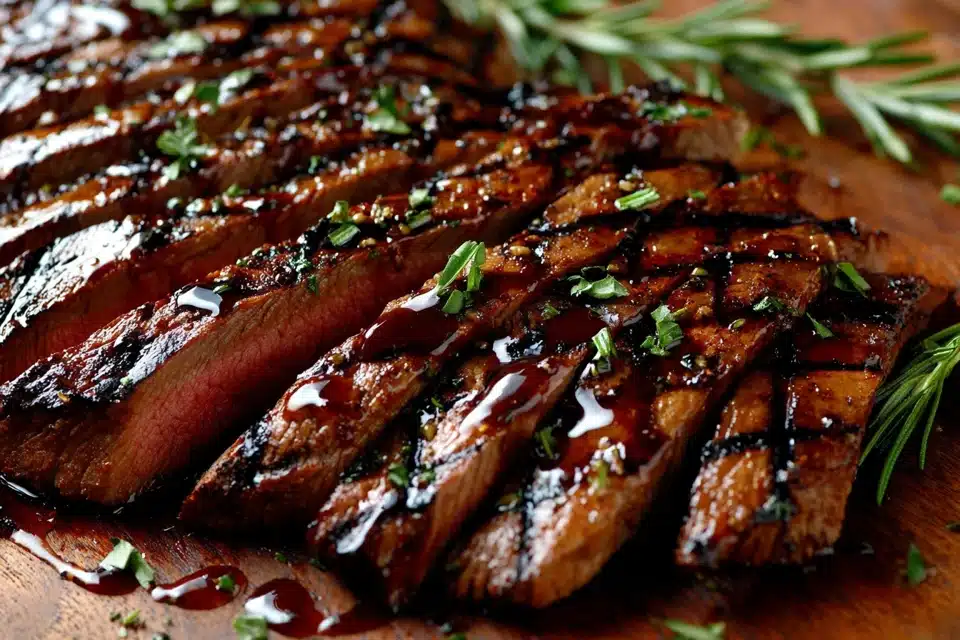
Tips, Variations & Substitutions
For deeper caramelization, pat the steak dry lightly before placing it on the grill. Excess marinade can inhibit browning.
Adding fresh rosemary or thyme to the marinade enhances herbal notes without overpowering the balsamic.
If flank steak is unavailable, skirt steak or flat iron steak can substitute. Cooking times may vary slightly.
For a stronger balsamic presence, reduce a small amount of balsamic vinegar in a saucepan until slightly thickened, then drizzle over sliced steak just before serving.
Allowing the steak to rest fully before slicing is one of the most important steps for maintaining juiciness.
Serving Ideas & Occasions
Balsamic Flank Steak pairs beautifully with roasted potatoes, grilled asparagus, or a crisp arugula salad topped with shaved Parmesan.
It also works well sliced over mixed greens for a hearty salad or layered into sandwiches with fresh mozzarella and tomatoes.
Serve it at summer cookouts, family dinners, or special gatherings where you want a flavorful yet uncomplicated main dish.
Leftover slices can be used in wraps or grain bowls the next day.
Nutritional & Health Notes
Flank steak is relatively lean compared to many other cuts of beef, offering high-quality protein with moderate fat content.
Balsamic vinegar contributes flavor without significant calories, making it an effective marinade base.
Grilling allows excess fat to drip away, supporting a lighter preparation method.
Pairing the steak with vegetables and whole grains helps create a balanced and nutrient-rich meal.
Portion awareness is helpful, as red meat should be enjoyed in moderation as part of a varied diet.
FAQs
How long should I marinate flank steak?
Marinate for at least 1 hour to allow surface flavor absorption. For deeper infusion, 4 to 6 hours in the refrigerator is ideal. Avoid marinating longer than 12 hours, as prolonged exposure to acidity may affect texture. Always refrigerate during marination for food safety.
What is the best way to cook Balsamic Flank Steak?
Grilling over medium-high heat produces excellent results, creating charred edges and smoky depth. A cast-iron skillet also works well, delivering a crisp crust. Both methods require high heat and minimal movement during cooking to achieve proper browning.
How do I keep flank steak tender?
Proper marination, avoiding overcooking, and slicing against the grain are key. The grain refers to the direction of muscle fibers. Cutting across these fibers shortens them, making each bite more tender.
Can I bake flank steak instead of grilling?
Yes, you can broil it in the oven. Place the steak on a rack and broil for about 4 to 6 minutes per side, depending on thickness. Monitor closely to prevent overcooking. Broiling mimics the high heat of grilling.
Should I discard the marinade?
Yes, discard used marinade after removing the steak. If you wish to use it as a sauce, reserve a portion before adding raw meat, or boil the marinade thoroughly to eliminate bacteria before serving.
What internal temperature is best?
For medium-rare, aim for 130 to 135°F. For medium, cook to 135 to 145°F. Removing the steak slightly before the target temperature allows for carryover cooking during resting.
Can I freeze marinated flank steak?
Yes, you can freeze the steak directly in its marinade for up to three months. Place it in a freezer-safe bag and remove excess air. Thaw overnight in the refrigerator before cooking.
PrintBalsamic Flank Steak for Weeknight Dinner
Balsamic Flank Steak features tender marinated beef grilled or seared to perfection and sliced thinly for a bold, savory main dish.
- Prep Time: 10 minutes (plus marinating time)
- Cook Time: 12 minutes
- Total Time: 22 minutes (plus marinating time)
- Yield: 4 servings 1x
Ingredients
1 1/2 pounds flank steak
1/3 cup balsamic vinegar
3 tablespoons olive oil
3 cloves garlic, minced
1 tablespoon Dijon mustard
1 teaspoon salt
1/2 teaspoon black pepper
1 teaspoon honey (optional)
1 teaspoon chopped fresh rosemary or thyme (optional)
Instructions
1. Whisk balsamic vinegar, olive oil, garlic, Dijon, salt, pepper, and honey.
2. Marinate steak for 1 to 6 hours in refrigerator.
3. Bring steak to room temperature for 30 minutes.
4. Grill or sear 4 to 6 minutes per side until desired doneness.
5. Rest 10 minutes before slicing against the grain.
6. Serve immediately.
Notes
Do not overcook flank steak.
Slice thinly for tenderness.
Optional balsamic reduction can be drizzled on top.