
Balsamic Glazed Roasted Vegetables Recipe 5 Simple Delicious Sweet & Tangy Veggie Side
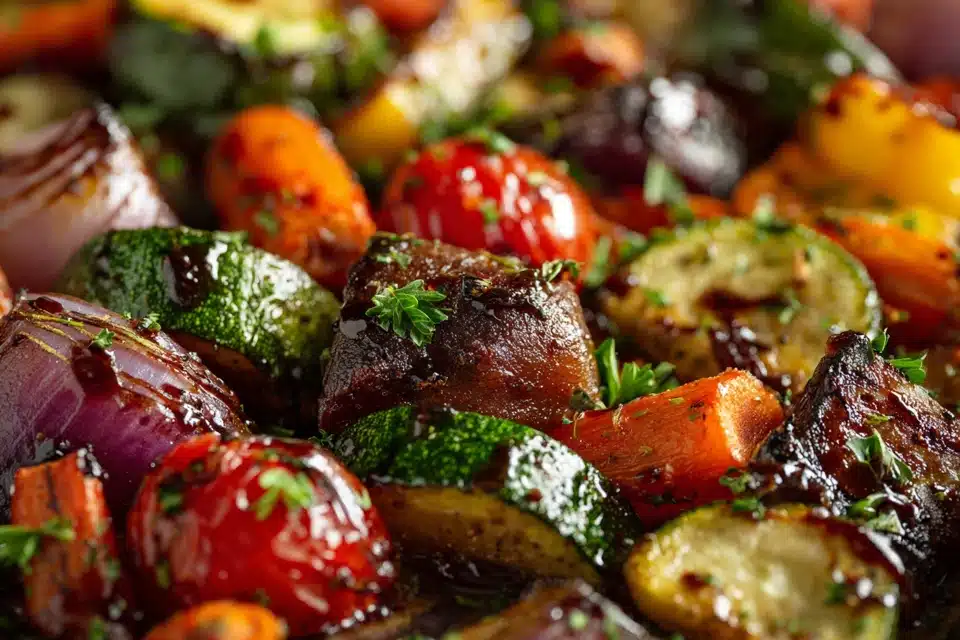
Balsamic Glazed Roasted Vegetables Recipe brings together a colorful mix of vegetables coated in a rich balsamic reduction that adds a balanced sweet and tangy flavor. Roasting allows the natural sugars in the vegetables to develop, while the glaze enhances their depth and creates a lightly caramelized finish.
This dish works well as a side for a variety of meals, from weeknight dinners to larger gatherings. The combination of vegetables can be adjusted based on season and preference, making it flexible and easy to adapt with what is available.
As the vegetables roast in the oven, their edges become slightly crisp while the centers remain tender. The balsamic glaze thickens as it heats, lightly coating each piece and bringing all the components together. A touch of oil helps the vegetables roast evenly and prevents them from drying out.
The result is a dish with layered flavor, where each vegetable contributes its own texture and taste while being unified by the glaze. It is simple to prepare and delivers a well-rounded side that pairs with many main courses.
Ingredients Overview
Vegetables form the foundation of this recipe. A mix of bell peppers, zucchini, carrots, red onions, and cherry tomatoes is commonly used, but the selection can be adjusted based on availability. Each vegetable brings its own texture and flavor. Carrots add natural sweetness and firmness, zucchini becomes tender and slightly soft, onions develop a mild sweetness when roasted, and bell peppers add a subtle crispness and color.
Balsamic vinegar is the key component of the glaze. When reduced, it develops a thicker consistency and a concentrated flavor that is both tangy and slightly sweet. It coats the vegetables and enhances their natural taste without overpowering them.
Olive oil is used to help the vegetables roast evenly. It prevents sticking, promotes browning, and contributes a light richness that supports the glaze. It also helps distribute the seasoning across the vegetables.
Garlic adds aromatic depth to the dish. Fresh minced garlic blends into the glaze or is tossed with the vegetables before roasting, infusing them with subtle savory notes as they cook.
Seasonings such as salt and black pepper are used to balance the flavors. Salt enhances the natural taste of the vegetables and helps bring out the sweetness of the balsamic glaze, while pepper adds a mild hint of heat.
Optional additions like dried herbs, such as thyme or oregano, can be included for extra flavor. These herbs complement the balsamic glaze and add a subtle earthy note to the finished dish.
Together, these ingredients create a cohesive roasted vegetable dish where the natural flavors are enhanced by the glaze, resulting in a balanced combination of sweet, tangy, and savory elements.
Ingredients
2 cups broccoli florets
1 cup sliced carrots
1 red bell pepper, chopped
1 zucchini, sliced into half-moons
1 red onion, cut into wedges
1 cup cherry tomatoes
3 tablespoons olive oil
3 tablespoons balsamic vinegar
2 cloves garlic, minced
1 teaspoon salt
1/2 teaspoon black pepper
1 teaspoon dried thyme or oregano (optional)
Step-by-Step Instructions
Begin by preheating the oven to 425°F. A high temperature helps the vegetables roast properly, allowing them to develop a light caramelization while remaining tender inside.
Prepare the vegetables by washing and cutting them into evenly sized pieces. Uniform sizing helps ensure that all vegetables cook at a similar rate and prevents some from becoming overcooked while others remain underdone.
Place the prepared vegetables in a large mixing bowl. Add the broccoli, carrots, bell pepper, zucchini, red onion, and cherry tomatoes.
In a separate small bowl, combine the olive oil, balsamic vinegar, minced garlic, salt, black pepper, and dried herbs if using. Stir the mixture until well combined.
Pour the balsamic mixture over the vegetables. Toss everything together until the vegetables are evenly coated with the oil and glaze mixture. Make sure the seasoning is distributed throughout the bowl.
Spread the vegetables in a single layer on a large baking sheet. Avoid overcrowding, as this can cause the vegetables to steam rather than roast. If needed, use two baking sheets to ensure proper spacing.
Place the baking sheet in the preheated oven and roast for about 25 to 35 minutes. Halfway through the cooking time, gently stir or turn the vegetables to promote even roasting.
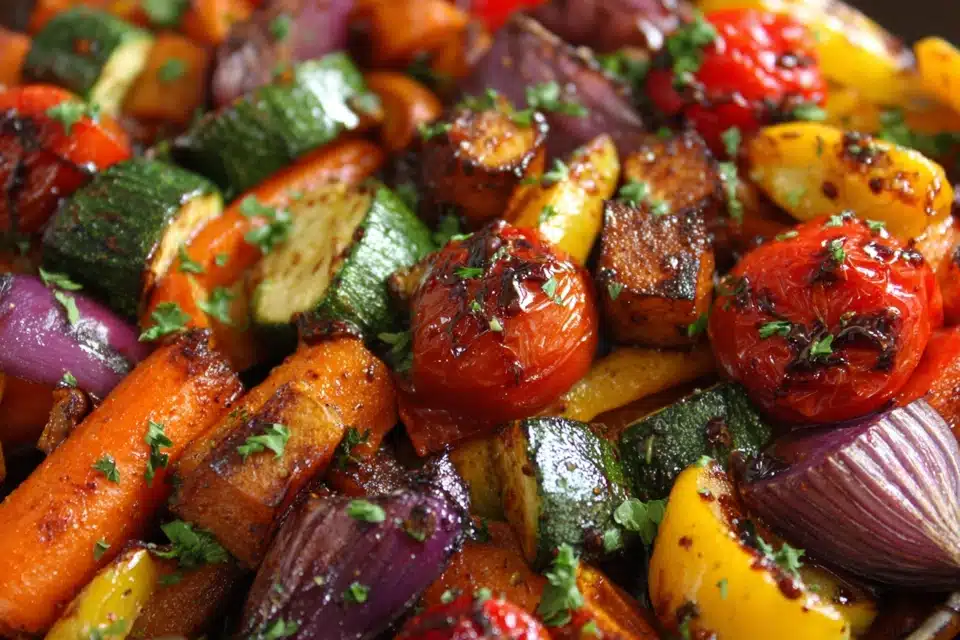
The vegetables are done when they are tender and lightly browned at the edges. The cherry tomatoes should appear slightly blistered, and the carrots should be soft when pierced with a fork.
If a slightly thicker glaze is desired, the remaining balsamic mixture can be lightly drizzled over the vegetables during the final few minutes of roasting. This allows the glaze to coat the vegetables without burning.
Remove the vegetables from the oven and let them rest for a few minutes before serving. This allows the flavors to settle and the glaze to thicken slightly.
Transfer to a serving dish and serve warm. The vegetables should have a balance of tender interiors and lightly roasted edges, with the glaze evenly coating each piece.
Tips, Variations & Substitutions
Different vegetables can be used depending on preference or season. Cauliflower, Brussels sprouts, mushrooms, or asparagus can be added or substituted. Adjust cooking times slightly based on the density of the vegetables used.
For a slightly sweeter glaze, a small amount of maple syrup or honey can be added to the balsamic mixture. This enhances the natural sweetness and creates a more pronounced glaze.
If a stronger garlic flavor is preferred, additional minced garlic can be included or roasted alongside the vegetables. Garlic powder can also be used for a more subtle and evenly distributed flavor.
Fresh herbs can be used in place of dried herbs. Thyme, rosemary, or basil can be added after roasting to maintain their fresh aroma and color.
To add a hint of spice, a small pinch of red pepper flakes can be mixed into the glaze. This adds a mild heat that complements the sweetness of the balsamic vinegar.
For a richer finish, a small amount of grated cheese such as Parmesan can be sprinkled over the vegetables after roasting. The heat from the vegetables will slightly melt the cheese, adding a savory layer of flavor.
Leftover vegetables can be stored in an airtight container in the refrigerator and reheated in the oven or skillet. Reheating in the oven helps maintain texture better than microwaving.
Serving Ideas & Occasions
Balsamic Glazed Roasted Vegetables pair well with roasted meats such as chicken, beef, pork, or fish. The tangy glaze complements savory main dishes and adds balance to the plate.
They can also be served alongside grain-based dishes such as rice, quinoa, or pasta. The vegetables add color, texture, and flavor, making them a versatile addition to many meals.
This dish is suitable for family dinners, holiday meals, and gatherings where a vegetable side is needed. It can be prepared in advance and reheated before serving, making it convenient for planning multiple dishes.
The vegetables can also be served as part of a vegetarian meal when paired with grains or legumes. Their variety of textures and flavors makes them satisfying on their own or as part of a larger spread.
For presentation, a light drizzle of additional balsamic glaze or a sprinkle of fresh herbs can be added before serving. This enhances both appearance and flavor without complicating the dish.
Nutritional & Health Notes
Vegetables provide fiber, vitamins, and minerals that contribute to overall dietary balance. The variety of vegetables used in this recipe offers a range of nutrients, including vitamin C, potassium, and antioxidants.
Olive oil adds healthy fats that help with the absorption of fat-soluble vitamins. It also contributes to the roasting process by promoting even cooking and light browning.
Balsamic vinegar adds flavor with minimal calories. When reduced, it becomes concentrated, allowing a small amount to provide strong taste without significantly impacting nutritional balance.
This dish can fit into a balanced meal when served alongside protein and whole grains. Portion sizes can be adjusted depending on dietary needs and overall meal composition.
FAQs
Can I use frozen vegetables for this recipe?
Frozen vegetables can be used, but they should be thawed and drained before roasting to reduce excess moisture. Fresh vegetables are preferred for better texture and browning, as frozen vegetables tend to release more water during cooking, which can affect caramelization.
How do I prevent the vegetables from becoming soggy?
To avoid soggy vegetables, ensure they are spread in a single layer on the baking sheet without overcrowding. Excess moisture can also be reduced by patting vegetables dry before seasoning. Roasting at a high temperature helps achieve better browning and texture.
Can I make the balsamic glaze thicker?
Yes, the balsamic vinegar can be gently simmered in a small saucepan before mixing with the vegetables to reduce and thicken it slightly. This creates a more concentrated glaze that coats the vegetables more effectively.
What vegetables work best in this recipe?
A variety of vegetables can be used, including broccoli, carrots, bell peppers, zucchini, onions, and cherry tomatoes. Vegetables that roast at similar rates are ideal. Harder vegetables like carrots may benefit from being cut smaller to match cooking times.
Can I prepare this dish ahead of time?
The vegetables can be chopped and stored in the refrigerator ahead of time. The glaze can also be mixed in advance. Combine and roast when ready to serve for the best texture and flavor.
How do I reheat leftovers?
Leftovers can be reheated in the oven at a moderate temperature until warmed through. This helps maintain texture better than microwaving. A skillet can also be used for reheating to restore some of the roasted edges.
Can I add protein to make this a full meal?
Yes, cooked protein such as grilled chicken, tofu, or chickpeas can be added after roasting. These additions make the dish more substantial and suitable as a main course when combined with grains or other sides.
PrintSimple Roasted Vegetables with Balsamic Reduction
Simple Roasted Vegetables with Balsamic Reduction is a colorful, oven-roasted side dish featuring tender vegetables with caramelized edges and a rich, slightly sweet balsamic glaze.
- Prep Time: 10 minutes
- Cook Time: 35 minutes
- Total Time: 45 minutes
- Yield: 4 servings 1x
Ingredients
2 cups broccoli florets
1 zucchini, sliced
1 red bell pepper, chopped
1 yellow squash, sliced
1 red onion, cut into wedges
2 tablespoons olive oil
1/2 teaspoon salt
1/4 teaspoon black pepper
1/2 teaspoon garlic powder
1/3 cup balsamic vinegar
1 tablespoon honey
Instructions
- Preheat oven to 425°F.
- Place vegetables on a baking sheet and drizzle with olive oil.
- Season with salt, pepper, and garlic powder, then toss to coat evenly.
- Spread vegetables in a single layer.
- Roast for 20–25 minutes, stirring halfway through.
- While vegetables roast, simmer balsamic vinegar and honey in a small saucepan over medium heat for 5–7 minutes until slightly thickened.
- Remove vegetables from oven once edges are browned and tender.
- Drizzle balsamic reduction over vegetables before serving.
Notes
Add Parmesan cheese or fresh herbs like thyme or parsley for added flavor.