
The Best Greek Salad Recipe for You: 7 Fresh Vibrant Bites
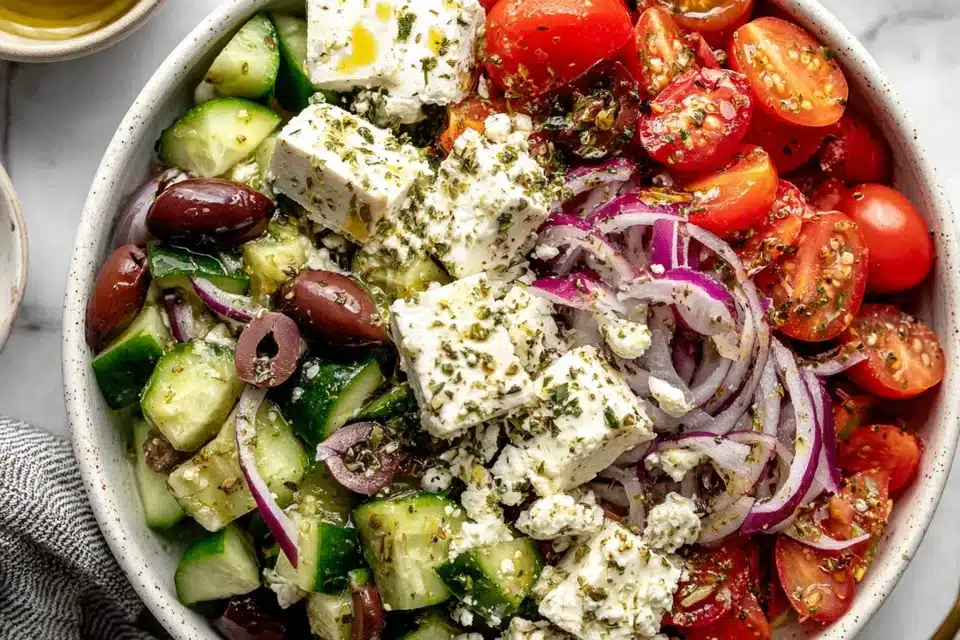
The Best Greek Salad Recipe for You is all about simplicity, freshness, and bold Mediterranean flavor. This classic dish combines crisp vegetables, briny olives, creamy feta, and a bright olive oil dressing that lets every ingredient shine.
Greek salad is known for its clean, refreshing taste. Juicy tomatoes, crunchy cucumber, and sharp red onion create a satisfying base, while feta cheese adds richness and depth. The dressing is light but flavorful, bringing everything together without overpowering the natural ingredients.
This salad is perfect as a side dish or a light meal. It pairs beautifully with grilled meats, seafood, and warm bread, making it a favorite for both everyday dinners and special gatherings.
Ingredients Overview
The key to The Best Greek Salad Recipe for You is using fresh, high-quality ingredients. Tomatoes should be ripe and flavorful, as they provide the base of the salad. Large tomatoes cut into wedges or chunks work best, but cherry tomatoes can also be used for convenience.
Cucumber adds a refreshing crunch. English or Persian cucumbers are ideal because they have fewer seeds and thinner skins. If using a standard cucumber, peeling and removing seeds can improve texture.
Red onion brings a sharp, slightly sweet bite. It should be sliced thinly so it blends well with the other ingredients. If the flavor is too strong, soaking it briefly in cold water softens its intensity.
Kalamata olives add a briny, savory element that defines Greek salad. Feta cheese is another essential component, offering a creamy and slightly salty contrast. Using a block of feta and crumbling it yourself gives better texture than pre-crumbled cheese.
The dressing is simple: olive oil, red wine vinegar, oregano, salt, and pepper. This combination enhances the vegetables without masking their natural flavor.
Ingredients
4 cups ripe tomatoes, cut into wedges or chunks
1 large cucumber, diced or sliced
1/2 cup thinly sliced red onion
3/4 cup Kalamata olives, pitted
4 ounces feta cheese, crumbled or in large chunks
3 tablespoons extra-virgin olive oil
1 1/2 tablespoons red wine vinegar
1 teaspoon dried oregano
1/2 teaspoon salt
1/4 teaspoon black pepper
Step-by-Step Instructions
Start by preparing the vegetables. Wash the tomatoes and cut them into large wedges or bite-sized chunks. Place them in a large mixing bowl. Dice or slice the cucumber into similar-sized pieces and add it to the bowl.
Thinly slice the red onion and add it to the mixture. If the onion is very strong, soak it in cold water for about 5 minutes, then drain and pat dry before adding.
Add the Kalamata olives to the bowl. These should be pitted for easier eating. Toss the vegetables gently to combine.
In a small bowl, whisk together the olive oil, red wine vinegar, dried oregano, salt, and black pepper. The dressing should be light and slightly tangy. Taste and adjust seasoning if needed.
Pour the dressing over the vegetables and toss gently to coat everything evenly. Be careful not to overmix, as the tomatoes can break down.
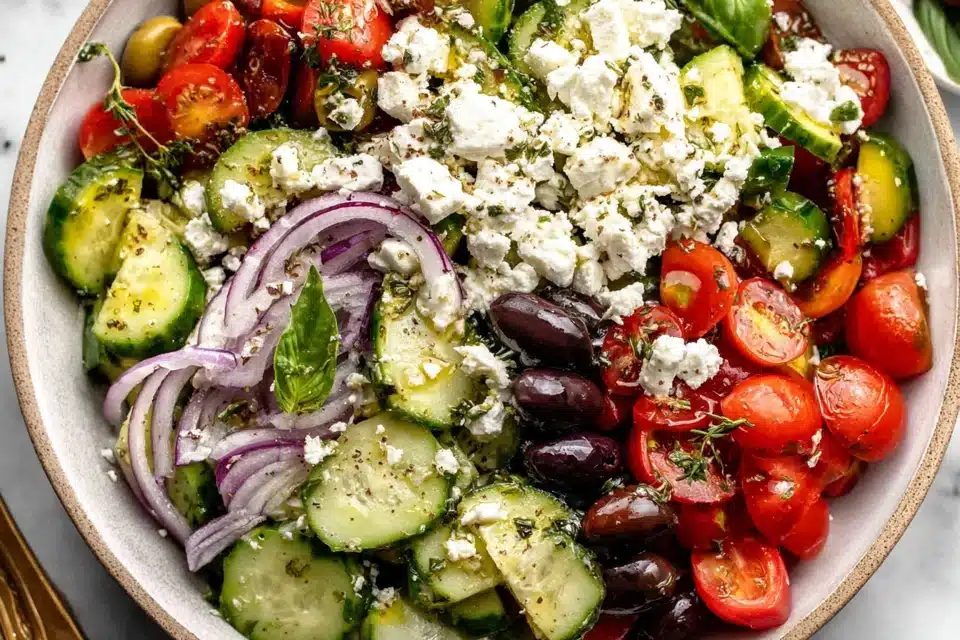
Add the feta cheese on top. For a more traditional presentation, leave it in larger chunks rather than mixing it fully into the salad. This keeps its texture intact and allows each bite to have a balance of flavors.
Let the salad sit for about 10 to 15 minutes before serving. This allows the flavors to blend while keeping the vegetables crisp.
Serve the salad at room temperature for the best flavor. Avoid chilling it too much, as cold temperatures can dull the taste of the tomatoes and olive oil.
Tips, Variations & Substitutions
For the best Greek salad, use ripe, in-season tomatoes and high-quality olive oil. These two ingredients make the biggest difference in flavor.
If you prefer a milder onion flavor, soak the slices briefly in cold water before adding them. This keeps the crunch while softening the sharpness.
You can add green bell peppers for extra crunch, which is common in some variations. Capers can also be added for an extra briny note.
For a more filling version, add grilled chicken, shrimp, or chickpeas. This turns the salad into a complete meal while keeping the Mediterranean flavor.
If feta is too strong, use a smaller amount or crumble it more finely. However, keeping it in larger pieces gives a more authentic texture.
Serving Ideas & Occasions
The Best Greek Salad Recipe for You pairs well with grilled chicken, lamb, steak, or fish. It is also a great side for Mediterranean dishes like kebabs, pita, hummus, and roasted vegetables.
Serve it at picnics, barbecues, or casual dinners. It is especially popular during warmer months when fresh vegetables are at their peak.
For a light meal, serve it with warm pita bread or alongside a bowl of soup. It also works well as part of a larger spread with dips and small plates.
Nutritional & Health Notes
Greek salad is naturally balanced and nutrient-rich. It includes fresh vegetables, healthy fats from olive oil, and protein from feta cheese.
Tomatoes and cucumbers provide hydration and vitamins, while olives and olive oil contribute beneficial fats. The dish is relatively low in carbohydrates and can fit into a variety of eating styles.
To reduce sodium, use fewer olives or rinse them lightly before adding. Adjusting the amount of feta can also help control salt levels.
FAQs
Can I make Greek salad ahead of time?
Yes, but it is best assembled shortly before serving. You can prepare the vegetables and dressing ahead, then combine them just before serving. Add the feta last to keep its texture intact.
Should Greek salad be refrigerated?
It can be refrigerated, but it tastes best at room temperature. If chilled, let it sit out for a few minutes before serving to bring back its full flavor.
Can I use a different type of cheese?
Feta is traditional, but you can use a milder cheese if preferred. Keep in mind that this will change the classic flavor of the salad.
What can I add to make it more filling?
Grilled chicken, shrimp, or chickpeas are great additions. They turn the salad into a more complete meal.
How long does Greek salad last?
It is best eaten the same day but can be stored in the refrigerator for up to 1 to 2 days. The vegetables may release some liquid over time.
Can I skip the olives?
Yes, but olives are a key part of the traditional flavor. If omitted, consider adding capers for a similar briny taste.
What herbs work best in Greek salad?
Dried oregano is the most traditional choice. Fresh oregano or parsley can also be used for a slightly different flavor.
PrintBest Greek Salad Recipe for Healthy Lunch or Side Dish

The Best Greek Salad Recipe for You is a fresh and vibrant dish made with tomatoes, cucumber, olives, feta, and a simple olive oil dressing. Perfect for light meals, side dishes, and Mediterranean-inspired menus.
- Prep Time: 15 minutes
- Cook Time: 0 minutes
- Total Time: 15 minutes
- Yield: 4 servings 1x
Ingredients
4 cups tomatoes
1 cucumber
1/2 cup red onion
3/4 cup Kalamata olives
4 ounces feta cheese
3 tablespoons olive oil
1 1/2 tablespoons red wine vinegar
1 teaspoon oregano
1/2 teaspoon salt
1/4 teaspoon black pepper
Instructions
- Cut tomatoes into wedges or chunks.
- Dice or slice the cucumber.
- Thinly slice the red onion.
- Combine vegetables and olives in a bowl.
- Whisk olive oil, vinegar, oregano, salt, and pepper.
- Pour dressing over vegetables and toss gently.
- Add feta cheese on top.
- Let sit for 10 to 15 minutes.
- Taste and adjust seasoning.
- Serve at room temperature.
Notes
Use fresh, ripe vegetables for best flavor.
Add feta last to maintain texture.
Serve at room temperature for best taste.
Store in the refrigerator for up to 2 days.