
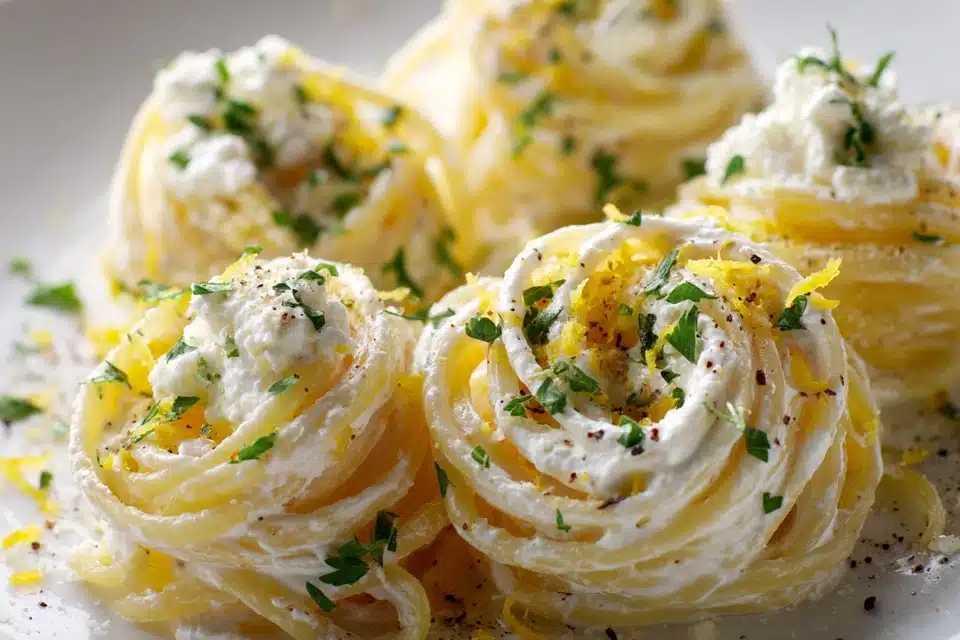
The Best Lemon Ricotta Pasta: 5 Simple Creamy Steps
Introduction
The Best Lemon Ricotta Pasta combines creamy ricotta cheese, bright citrus, and tender pasta for a dish that feels comforting yet fresh. The mild richness of ricotta blends smoothly with fragrant lemon, creating a sauce that coats every strand without feeling heavy.
This pasta has become a favorite in many home kitchens because it relies on simple ingredients that work naturally together. The soft texture of ricotta melts gently with warm pasta, while lemon zest and juice add brightness that balances the creaminess.
Each bite offers a pleasant contrast of textures. The pasta remains tender, the sauce stays silky, and the citrus aroma adds a refreshing lift. A sprinkle of Parmesan deepens the savory notes while fresh herbs add color and fragrance.
Another reason cooks appreciate The Best Lemon Ricotta Pasta is its simplicity. The sauce forms in minutes while the pasta cooks, making the recipe ideal for quick dinners without complicated preparation.
Served warm in a large bowl and finished with extra cheese and herbs, this pasta delivers creamy comfort, gentle citrus flavor, and a smooth texture that makes it satisfying for everyday meals.
Ingredients Overview
A handful of thoughtfully chosen ingredients create the balanced flavor of The Best Lemon Ricotta Pasta. Each component contributes to the final creamy texture and bright taste.
Pasta provides the foundation of the dish. Long varieties such as spaghetti, linguine, or fettuccine work particularly well because their strands hold the ricotta sauce evenly. Short shapes like penne or fusilli also perform nicely since their grooves capture the sauce.
Ricotta cheese serves as the primary base of the sauce. Whole-milk ricotta produces the smoothest texture and mild flavor. When mixed with warm pasta and pasta water, the cheese becomes creamy and silky without needing heavy cream.
Lemon adds the defining flavor. Fresh lemon zest provides aromatic citrus oils, while lemon juice introduces gentle acidity that balances the richness of the cheese.
Garlic brings savory warmth. A small amount of finely minced garlic spreads through the sauce and complements the lemon without overwhelming the dish.
Olive oil contributes subtle richness and helps the ingredients blend smoothly. It also carries the aroma of garlic throughout the sauce.
Parmesan cheese introduces a salty, savory element that deepens flavor and thickens the sauce slightly as it melts.
Reserved pasta cooking liquid plays a key role in creating the sauce. The starch in the water binds ricotta and Parmesan together, allowing the sauce to cling to pasta.
Fresh herbs such as basil or parsley add fragrance and color. They provide a bright finishing touch that complements the citrus flavor.
Salt and freshly ground black pepper round out the seasoning and help balance the overall flavor.
Optional ingredients such as spinach, peas, or roasted asparagus can be added for additional color and texture without changing the character of the dish.
Step-by-Step Instructions
Begin by filling a large pot with water and adding a generous pinch of salt. Bring the water to a rolling boil over high heat.
Add the pasta and cook until tender with slight firmness in the center. Stir occasionally so the noodles cook evenly and do not stick together.
Before draining the pasta, reserve about one cup of the cooking water. This starchy liquid will help create the creamy ricotta sauce.
While the pasta cooks, prepare the ricotta mixture. In a large mixing bowl combine ricotta cheese, grated Parmesan, lemon zest, lemon juice, olive oil, and minced garlic.
Stir the ingredients until the mixture becomes smooth and lightly creamy. Add a pinch of salt and freshly ground black pepper.
Once the pasta finishes cooking, drain it and immediately transfer the hot pasta into the bowl with the ricotta mixture. The heat from the pasta gently warms the cheese and begins forming the sauce.
Add a small splash of reserved pasta water and toss the pasta carefully. Continue adding small amounts of pasta water while mixing until the sauce reaches a silky consistency.
The ricotta should melt slightly and coat the pasta evenly, creating a creamy texture without thick clumps.
Taste the pasta and adjust seasoning. If a brighter citrus flavor is desired, add a small squeeze of additional lemon juice.
For extra depth, sprinkle a little more grated Parmesan while tossing the pasta.
Finish the dish with chopped parsley or basil. The herbs add fragrance and color that complement the creamy sauce.
Serve immediately while the pasta remains warm and glossy. The finished dish should appear lightly coated with sauce and carry a fresh citrus aroma.
Avoid overheating the ricotta mixture directly on the stove. Gentle heat from the pasta keeps the sauce smooth and prevents curdling.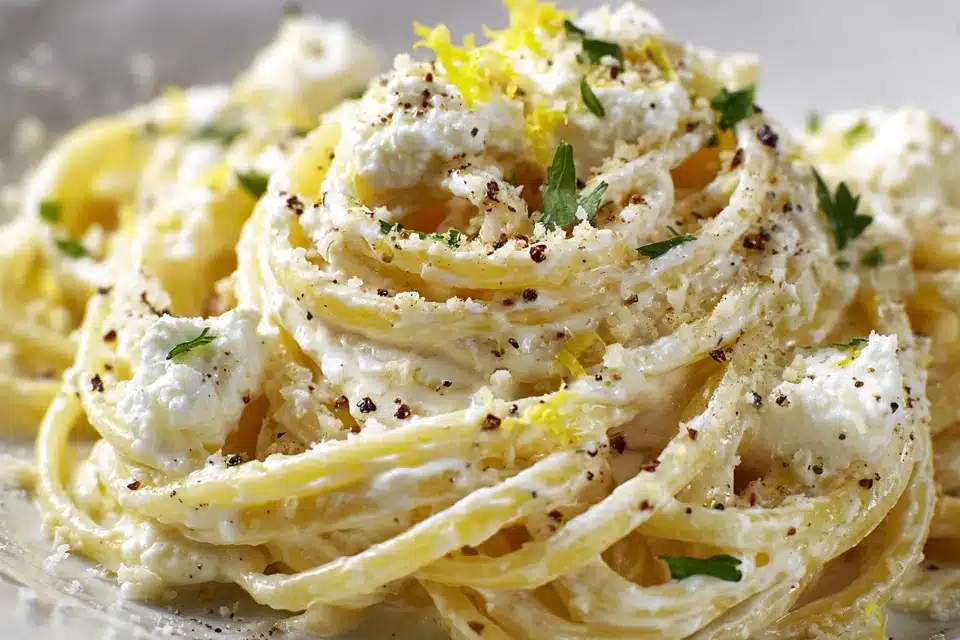
Tips, Variations & Substitutions
The Best Lemon Ricotta Pasta adapts easily with small ingredient changes while maintaining its creamy citrus character.
Vegetables can be added for color and variety. Fresh spinach wilts quickly when stirred into hot pasta. Peas or roasted asparagus also blend naturally with the lemon and cheese.
For additional protein, grilled chicken slices or sautéed shrimp pair nicely with the ricotta sauce. These ingredients turn the dish into a more filling meal.
Whole-grain pasta provides extra fiber and a slightly nutty flavor that complements the lemon and garlic.
For stronger citrus aroma, increase the lemon zest slightly. Zest contains fragrant oils that deepen lemon flavor without increasing acidity.
Garlic flavor can also be adjusted. Lightly sautéing the garlic in olive oil before adding it to the ricotta mixture creates a softer, sweeter garlic taste.
Those looking for a lighter version can combine ricotta with a spoonful of Greek yogurt. This mixture keeps the sauce creamy while introducing gentle tang.
For dairy-free preparation, blended soaked cashews or plant-based ricotta alternatives can replace traditional cheese. Nutritional yeast may provide savory depth similar to Parmesan.
Leftover pasta can be stored in a sealed container in the refrigerator for several days. When reheating, add a small splash of milk or broth and warm gently while stirring.
Serving Ideas & Occasions
The Best Lemon Ricotta Pasta works beautifully for both everyday meals and relaxed gatherings. Its creamy texture and bright citrus flavor create a comforting yet refreshing dish.
A crisp green salad dressed with lemon vinaigrette pairs well with the pasta. The acidity from the dressing complements the creamy ricotta sauce.
Warm bread such as a rustic loaf or garlic bread also serves as an excellent side. Bread can gather the creamy sauce remaining on the plate.
Roasted vegetables like asparagus, zucchini, or cherry tomatoes bring additional color and flavor to the meal.
For drinks, sparkling water with lemon slices or a chilled white wine pairs nicely with the citrus and creamy elements of the pasta.
Serving the pasta in a large bowl at the center of the table encourages sharing and creates a welcoming presentation for family meals or small gatherings.
Nutritional & Health Notes
The Best Lemon Ricotta Pasta offers a balanced mixture of carbohydrates, protein, and dairy richness when enjoyed in moderate portions.
Pasta provides energy through complex carbohydrates that support daily activity. Choosing whole-grain pasta can increase fiber intake and contribute to digestive health.
Ricotta cheese supplies protein and calcium. Compared with heavier cream-based sauces, ricotta provides creamy texture with moderate fat content.
Lemon adds vitamin C and bright acidity that balances the richness of cheese. The citrus flavor also allows the dish to remain flavorful without excessive seasoning.
Olive oil contributes monounsaturated fats that complement many balanced eating patterns.
Adding vegetables such as spinach or peas increases fiber, vitamins, and minerals in the dish. These ingredients also bring vibrant color and freshness.
Pairing the pasta with a salad or roasted vegetables can create a well-rounded meal that includes carbohydrates, protein, healthy fats, and plant nutrients.
FAQs
What makes lemon ricotta pasta creamy without heavy cream?
Ricotta cheese naturally has a soft and creamy texture that becomes even smoother when mixed with hot pasta. When the warm pasta is tossed with ricotta and a small amount of pasta cooking liquid, the starch in the water blends with the cheese and forms a silky sauce. This technique creates a creamy coating without the need for heavy cream. Parmesan cheese also helps thicken the sauce slightly while adding savory flavor.
Which pasta shapes work best for lemon ricotta pasta?
Long pasta shapes such as spaghetti, linguine, and fettuccine work very well because the strands allow the ricotta sauce to coat evenly. Short pasta shapes like penne, fusilli, or rigatoni also perform nicely since their ridges capture sauce and small ingredients. The most important factor is cooking the pasta until tender with slight firmness so it maintains structure during mixing with the ricotta sauce.
Can vegetables be added to lemon ricotta pasta?
Yes, many vegetables blend naturally with lemon ricotta pasta. Spinach can be stirred into the hot pasta so it wilts gently. Peas, asparagus, or roasted zucchini also pair well with the creamy citrus sauce. These vegetables bring color, texture, and additional nutrients to the dish without overpowering the lemon flavor.
How can the lemon flavor be adjusted?
The lemon intensity can be adjusted by changing the amount of zest and juice. Increasing lemon zest adds stronger citrus aroma because the peel contains fragrant oils. Adding more lemon juice increases acidity and brightness. Many cooks add a small squeeze of fresh lemon juice just before serving to refresh the flavor.
Can this pasta be prepared ahead of time?
Lemon ricotta pasta tastes best when served immediately after mixing because the sauce remains smooth and creamy. However, leftovers can be stored in the refrigerator in a sealed container for up to three days. When reheating, warm the pasta gently in a skillet with a splash of milk or broth. Stir frequently so the sauce returns to a creamy consistency.
Is lemon ricotta pasta suitable for vegetarian meals?
Yes, this dish fits naturally into vegetarian cooking since the main ingredients include pasta, ricotta cheese, lemon, olive oil, and herbs. Parmesan cheese can be replaced with vegetarian-friendly versions if needed. Vegetables such as spinach, peas, or mushrooms can also be added to increase flavor and nutrition.
What proteins pair well with lemon ricotta pasta?
Several proteins complement the creamy citrus sauce. Grilled chicken slices add savory depth and texture. Shrimp also pairs very well with lemon and garlic flavors and cooks quickly in a skillet. For plant-based options, white beans or chickpeas can be stirred into the pasta to add protein and fiber while keeping the dish balanced.
PrintHomemade Lemon Ricotta Pasta – Light and Creamy Pasta Dinner
The Best Lemon Ricotta Pasta combines tender pasta with creamy ricotta cheese, fresh lemon, garlic, and Parmesan for a bright and comforting meal.
- Prep Time: 10 minutes
- Cook Time: 15 minutes
- Total Time: 25 minutes
- Yield: 4 servings 1x
Ingredients
12 ounces spaghetti or linguine
1 cup whole milk ricotta cheese
1/2 cup grated Parmesan cheese
1 tablespoon olive oil
2 garlic cloves minced
1 teaspoon lemon zest
2 tablespoons fresh lemon juice
1/3 cup reserved pasta cooking liquid
Salt to taste
Freshly ground black pepper to taste
2 tablespoons chopped parsley or basil
Instructions
1. Bring a large pot of salted water to a boil and cook pasta until tender with slight firmness. Reserve pasta cooking liquid and drain.
2. In a large bowl combine ricotta cheese, Parmesan, olive oil, garlic, lemon zest, and lemon juice.
3. Add hot drained pasta to the bowl with the ricotta mixture.
4. Pour in a small amount of pasta cooking liquid and toss until creamy.
5. Continue adding pasta water as needed until the sauce coats the pasta smoothly.
6. Season with salt and black pepper.
7. Finish with chopped parsley or basil and additional Parmesan before serving.
Notes
Adding pasta cooking liquid gradually helps create a silky sauce. Spinach, peas, or grilled chicken can be added for variation.