
Spring Vegetable Pasta: 6 Fresh Garden Pasta Steps
Introduction
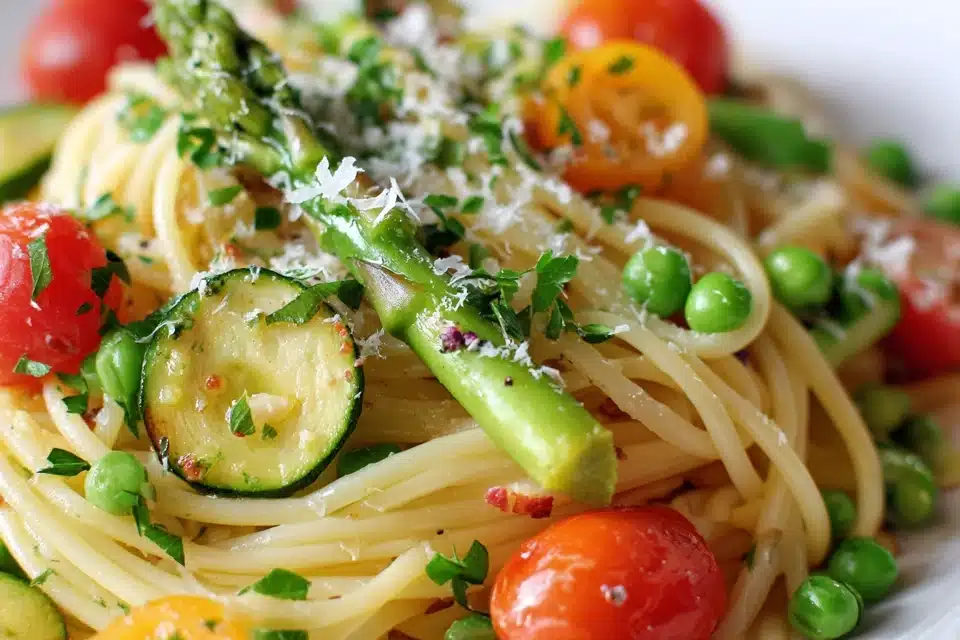
Spring Vegetable Pasta celebrates the arrival of fresh seasonal produce paired with tender pasta and a light, flavorful sauce. The dish highlights crisp vegetables such as asparagus, peas, carrots, and zucchini, creating a colorful plate filled with natural sweetness and gentle texture.
This pasta style often appears in kitchens when markets begin offering vibrant spring vegetables. Rather than relying on heavy sauces, the vegetables themselves provide flavor and brightness. Olive oil, garlic, and Parmesan help bring the ingredients together while allowing the produce to remain the highlight.
Texture is one of the most appealing parts of Spring Vegetable Pasta. Each vegetable contributes something different. Asparagus offers a tender bite, peas bring subtle sweetness, and zucchini softens slightly while maintaining shape. Combined with pasta, the dish feels light yet satisfying.
Another reason this recipe remains popular is its flexibility. Different vegetables can be used depending on what is available in the kitchen or at the market.
Served warm with herbs and cheese, Spring Vegetable Pasta offers a bowl filled with color, fresh flavor, and comforting texture that works beautifully for everyday meals.
Ingredients Overview
The flavor of Spring Vegetable Pasta depends on fresh produce and simple pantry ingredients that work naturally together.
Pasta forms the base of the dish. Shapes such as penne, farfalle, or fusilli work particularly well because their curves and ridges hold small vegetable pieces and light sauce. Long pasta varieties such as spaghetti or linguine can also be used if preferred.
Asparagus plays a key role in many spring pasta dishes. Cut into small pieces, it cooks quickly and adds tender texture with a mild earthy flavor.
Green peas contribute gentle sweetness and bright color. Fresh peas are excellent during spring harvest, though frozen peas work well and cook quickly in the skillet.
Carrots add subtle sweetness and color contrast. Thin slices or matchsticks allow them to soften evenly while still holding slight firmness.
Zucchini provides delicate flavor and soft texture that blends naturally with the other vegetables. It cooks quickly and absorbs the garlic and olive oil.
Garlic adds savory warmth and aroma. When sautéed gently in olive oil, garlic distributes flavor throughout the vegetables without overpowering them.
Olive oil forms the light base of the sauce. It coats the vegetables and pasta while carrying garlic aroma through the dish.
Parmesan cheese contributes saltiness and savory depth. Finely grated cheese melts easily and blends with the pasta cooking liquid to create a light coating.
Reserved pasta cooking water helps combine ingredients into a smooth sauce. The starch within the water allows the oil and cheese to cling to the pasta.
Fresh herbs such as basil, parsley, or chives provide fragrance and color at the end of cooking.
Salt and freshly ground black pepper balance the overall flavor.
Other vegetables like snap peas, broccoli florets, or cherry tomatoes can be included depending on seasonal availability.
Step-by-Step Instructions
Start by bringing a large pot of salted water to a rolling boil. Add the pasta and cook until tender with slight firmness in the center. Stir occasionally to prevent sticking.
Before draining, reserve about one cup of the pasta cooking liquid. This starchy water will help create a light sauce later.
While the pasta cooks, warm olive oil in a wide skillet over medium heat. Add minced garlic and cook briefly until its aroma becomes noticeable. Stir carefully so the garlic softens without browning too much.
Add carrots and asparagus to the skillet first since they take slightly longer to cook. Stir frequently for several minutes until they begin to soften.
Next add zucchini and continue cooking until the vegetables become crisp-tender. Their colors should remain bright while the edges develop slight golden spots.
Stir in green peas and cook for another minute until heated through.
Reduce heat slightly and add a small splash of the reserved pasta water. This liquid gathers the flavors from the skillet and begins forming the base of the sauce.
Drain the pasta and transfer it directly into the skillet with the vegetables. Toss gently so the pasta mixes evenly with the vegetables.
Sprinkle grated Parmesan over the pasta while tossing continuously. Add small amounts of pasta cooking liquid until the cheese melts and forms a light coating across the noodles.
Season the dish with salt and freshly ground black pepper. Taste and adjust seasoning as needed.
Remove the skillet from heat and add freshly chopped herbs such as parsley, basil, or chives.
Serve immediately while the vegetables remain bright and slightly crisp. The finished pasta should appear colorful, lightly coated with sauce, and filled with fresh vegetable pieces.
Avoid overcooking the vegetables since softness can reduce the vibrant texture that defines this dish.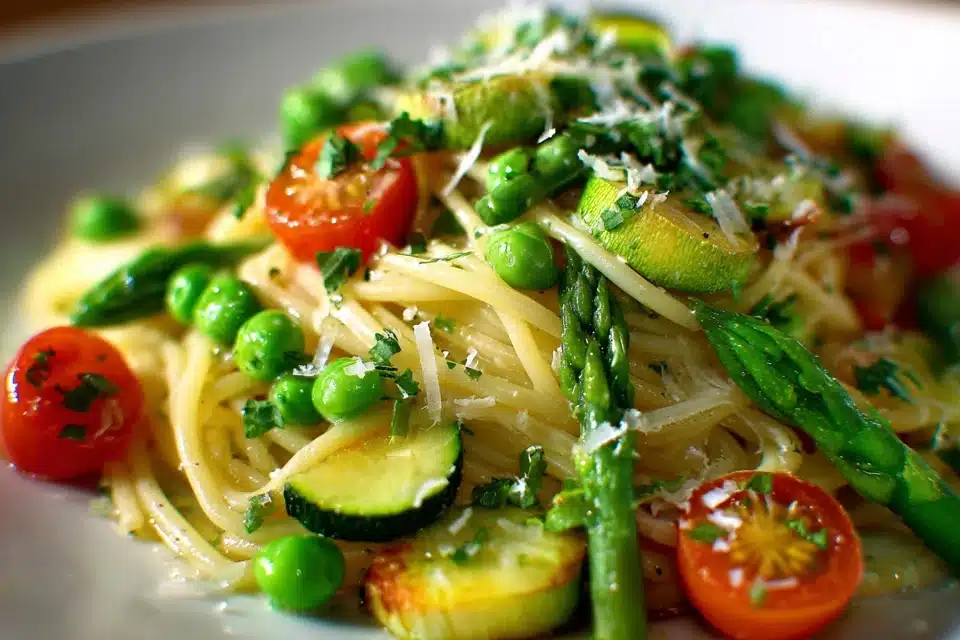
Tips, Variations & Substitutions
Spring Vegetable Pasta adapts easily based on available produce or personal preference.
Vegetable variety is one of the most appealing parts of this recipe. Snap peas, broccoli florets, or cherry tomatoes can be added to expand the mixture and introduce additional color.
Uniform vegetable size helps maintain even cooking. Thin slices or small pieces allow vegetables to soften quickly without losing texture.
Protein additions turn the pasta into a more filling meal. Grilled chicken, sautéed shrimp, or white beans pair comfortably with the vegetables and light sauce.
For a slightly creamy version, a spoonful of ricotta cheese can be stirred into the pasta at the end of cooking. The cheese melts gently and creates a soft coating without overwhelming the vegetables.
Whole-grain pasta provides extra fiber and a subtle nutty flavor that works nicely with fresh produce.
Lemon zest can be added just before serving for extra brightness. The citrus aroma pairs beautifully with asparagus and peas.
If preparing the dish ahead, store it in a sealed container in the refrigerator. Reheat gently in a skillet with a splash of broth or water so the pasta remains moist.
Serving Ideas & Occasions
Spring Vegetable Pasta fits many occasions, from quick weeknight dinners to relaxed gatherings with friends or family.
A crisp green salad with lemon vinaigrette pairs beautifully with the pasta. The light acidity complements the olive oil and vegetables.
Warm bread or a rustic loaf works well alongside the dish and can gather the light sauce remaining on the plate.
Roasted vegetables such as cherry tomatoes or mushrooms can be served as an additional side to add depth to the meal.
For beverages, sparkling water with lemon slices or a chilled white wine pairs nicely with the fresh vegetable flavors.
Because the dish is colorful and inviting, it looks beautiful served in a large bowl placed at the center of the table. Guests can easily share portions while enjoying the vibrant mixture of pasta and vegetables.
Spring gatherings, family dinners, or casual weekend meals all benefit from the fresh flavor and light texture of this vegetable pasta.
Nutritional & Health Notes
Spring Vegetable Pasta offers a balanced combination of carbohydrates, vegetables, and healthy fats.
Pasta provides energy through complex carbohydrates that support daily activity. Choosing whole-grain pasta can increase fiber content and improve overall nutritional value.
Vegetables such as asparagus, carrots, peas, and zucchini contribute vitamins, minerals, and plant compounds that support overall health. They also add fiber that supports digestion.
Peas provide small amounts of plant-based protein while carrots contain beta-carotene, which the body converts into vitamin A.
Olive oil supplies monounsaturated fats that complement many balanced eating patterns.
Parmesan cheese contributes calcium and protein while adding savory flavor to the dish.
Including a generous portion of vegetables alongside pasta helps create a satisfying meal that feels comforting yet still includes nutrient-rich ingredients.
Pairing the pasta with a salad or additional vegetables can further increase fiber and vitamin variety within the meal.
FAQs
What vegetables are commonly used in spring vegetable pasta?
Spring vegetable pasta usually features produce that appears during the spring season. Common choices include asparagus, peas, carrots, zucchini, and snap peas. These vegetables cook quickly and provide bright color along with gentle sweetness. Many cooks also include broccoli florets or cherry tomatoes depending on availability. The goal is to create a mixture of vegetables that remain crisp-tender and vibrant while blending well with pasta and a light sauce.
Which pasta shapes work best for this dish?
Short pasta shapes such as penne, fusilli, or farfalle often work very well because their ridges and curves capture small vegetable pieces and sauce. Long pasta shapes like spaghetti or linguine can also work nicely if preferred. The most important factor is cooking the pasta until tender with slight firmness so it maintains structure when tossed with vegetables.
Can frozen vegetables be used?
Frozen vegetables can be used when fresh produce is unavailable. Frozen peas, broccoli, or asparagus work particularly well because they cook quickly and maintain their color. When using frozen vegetables, add them directly to the skillet during cooking and allow them to heat through before mixing with the pasta. Avoid overcooking so they keep their texture.
How can protein be added to spring vegetable pasta?
Protein additions can make the dish more filling. Grilled chicken slices, sautéed shrimp, or salmon pieces blend nicely with the vegetables and light sauce. For plant-based options, white beans or chickpeas work well. These ingredients can be stirred into the pasta during the final mixing stage.
How should leftovers be stored?
Leftover spring vegetable pasta should be stored in an airtight container in the refrigerator. It will generally stay fresh for up to three days. When reheating, place the pasta in a skillet with a small splash of broth, milk, or water and warm gently while stirring. This helps restore moisture and prevents the pasta from becoming dry.
Can lemon be added to this recipe?
Yes, lemon pairs very well with spring vegetables. A small amount of lemon zest or fresh lemon juice added at the end of cooking brightens the flavor and complements vegetables such as asparagus and peas. The citrus aroma adds freshness without overpowering the dish.
Is spring vegetable pasta suitable for vegetarian meals?
Yes, spring vegetable pasta is naturally vegetarian when prepared with vegetables, pasta, olive oil, and cheese. Parmesan or similar cheeses add savory flavor, though vegetarian alternatives can be used if needed. Because the dish focuses on vegetables, it fits easily into many vegetarian meal plans.
PrintSpring Veggie Pasta with Garlic and Light Olive Oil Sauce
Spring Vegetable Pasta combines tender pasta with asparagus, peas, carrots, and zucchini in a light garlic olive oil sauce finished with Parmesan and fresh herbs.
- Prep Time: 15 minutes
- Cook Time: 20 minutes
- Total Time: 35 minutes
- Yield: 4 servings 1x
Ingredients
12 ounces penne or farfalle pasta
2 tablespoons olive oil
3 garlic cloves minced
1 cup asparagus cut into small pieces
1/2 cup carrots sliced thin
1 cup zucchini sliced
1 cup green peas
1/2 cup grated Parmesan cheese
1/3 cup reserved pasta cooking liquid
2 tablespoons chopped parsley or basil
Salt to taste
Freshly ground black pepper to taste
Instructions
1. Bring a large pot of salted water to a boil and cook pasta until tender. Reserve pasta cooking liquid before draining.
2. Heat olive oil in a large skillet and sauté garlic briefly.
3. Add carrots and asparagus and cook for several minutes.
4. Add zucchini and continue cooking until vegetables are crisp-tender.
5. Stir in peas and cook briefly.
6. Add pasta and a splash of pasta water and toss together.
7. Sprinkle Parmesan cheese and mix until lightly coated.
8. Season with salt and black pepper and finish with fresh herbs.
Notes
Use fresh seasonal vegetables when available. Lemon zest or ricotta cheese can be added for variation.