

Easy Thai Red Curry 7 Creamy Cozy Comforting
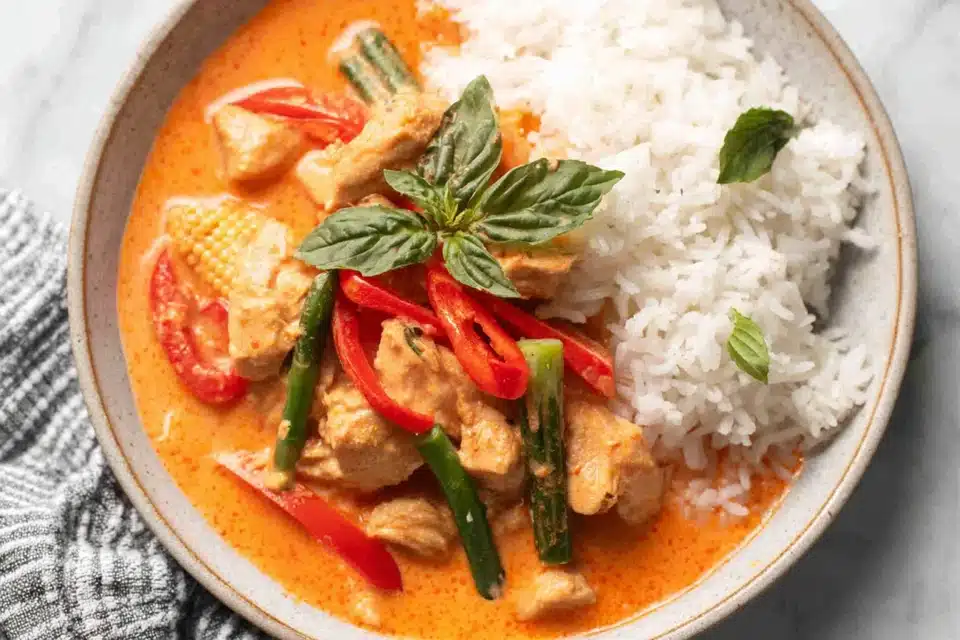
Easy Thai Red Curry is a rich, aromatic coconut-based curry made with Thai red curry paste, tender chicken or tofu, and a medley of vegetables simmered together in a silky sauce. It is one of the most comforting and flavorful Thai-inspired dishes you can make at home, delivering restaurant-style depth with simple pantry-friendly steps.
This curry is known for its balance of heat, creaminess, and subtle sweetness. The red curry paste provides bold spice and aromatics, while coconut milk softens everything into a smooth, luxurious sauce. Fresh herbs and lime brighten the dish at the end, making each bite layered and satisfying.
Easy Thai Red Curry works well for weeknight dinners because it comes together quickly in one pan and can be customized with whatever vegetables or protein you have available. It is flexible, forgiving, and consistently delicious.
Whether served over jasmine rice or noodles, this dish brings warmth, comfort, and bold flavor to the table with minimal effort.
Ingredients Overview
Thai red curry paste is the foundation of this recipe. It is made from dried chilies, garlic, lemongrass, galangal, shallots, and spices. This paste provides the signature heat, color, and depth of flavor. Store-bought versions vary in spice level, so the amount can be adjusted based on preference.
Coconut milk is essential for creating the creamy base. Full-fat coconut milk is recommended because it gives the curry a rich, velvety texture. It also balances the spice from the curry paste, making the dish smooth and comforting.
Chicken thighs are commonly used because they stay tender and juicy during simmering. Chicken breast can also be used for a leaner option but should be cooked carefully to avoid drying out. For a vegetarian version, tofu or chickpeas work well and absorb the curry flavors beautifully.
Vegetables add color, texture, and nutritional balance. Common choices include bell peppers, carrots, zucchini, and green beans. These vegetables hold their shape well in the sauce and provide a slight crunch that contrasts with the creamy curry.
Aromatics like garlic and ginger enhance the depth of flavor. They build a savory base that complements the curry paste and coconut milk.
Fish sauce adds saltiness and umami, giving the curry its authentic Thai flavor. For vegetarian versions, soy sauce or tamari can be used as a substitute.
A small amount of sugar balances the spice and acidity, rounding out the flavor profile without making the dish sweet.
Fresh basil and lime juice are added at the end to brighten the curry. They lift the richness of the coconut milk and add freshness to every bite.
Jasmine rice is the traditional pairing. Its fragrant, fluffy texture absorbs the curry sauce perfectly.
Ingredients
1 1/2 pounds chicken thighs or chicken breast, sliced
2 tablespoons vegetable oil
3 tablespoons Thai red curry paste
3 cloves garlic, minced
1 tablespoon ginger, grated
1 can (13.5 oz) full-fat coconut milk
1 cup chicken broth
1 tablespoon fish sauce
1 tablespoon soy sauce
1 teaspoon sugar
1 red bell pepper, sliced
1 cup green beans
1 carrot, thinly sliced
1 zucchini, sliced
1 cup baby spinach (optional)
1/2 cup fresh basil leaves
1 tablespoon lime juice
For serving:
2–3 cups cooked jasmine rice
Step-by-Step Instructions
Start by preparing all ingredients before cooking. Slice the chicken into even pieces and cut vegetables into uniform sizes so they cook evenly in the curry.
Heat vegetable oil in a large skillet or pot over medium heat. Add the Thai red curry paste and cook it for 1 to 2 minutes. This step is important because it releases the essential oils in the paste and deepens its flavor.
Add minced garlic and grated ginger. Stir continuously until fragrant, being careful not to burn them. This builds the aromatic base of the curry.
Add the chicken pieces to the pan and stir to coat them in the curry paste mixture. Cook until the chicken is lightly browned on the outside.
Pour in the coconut milk and chicken broth, stirring well to combine. Bring the mixture to a gentle simmer so the sauce becomes smooth and creamy.
Add fish sauce, soy sauce, and sugar. Stir until fully dissolved into the curry. Taste and adjust seasoning if needed.
Add the vegetables starting with the firmer ones like carrots and green beans. Let them simmer for a few minutes before adding softer vegetables like bell peppers and zucchini. This ensures everything is cooked perfectly without becoming mushy.
Allow the curry to simmer gently until the chicken is fully cooked and the vegetables are tender but still vibrant.
If using spinach, stir it in at the end so it wilts quickly without overcooking.
Turn off the heat and add fresh lime juice and basil leaves. Stir gently to combine.
Serve the curry hot over jasmine rice, allowing the sauce to soak into the grains.
Tips, Variations & Substitutions
Chicken thighs are recommended for the most tender and flavorful result, but chicken breast or shrimp can also be used. Shrimp should be added near the end of cooking to prevent overcooking.
For a vegetarian version, replace chicken with tofu or chickpeas. Tofu should be pan-fried first for better texture before adding it to the curry.
Vegetables can be customized based on preference or seasonality. Broccoli, mushrooms, snap peas, and eggplant all work well in this recipe.
For extra heat, add more curry paste or a pinch of chili flakes. For a milder version, reduce the curry paste and increase coconut milk slightly.
If fish sauce is unavailable, soy sauce or tamari can be used, though the flavor will be slightly less traditional.
A squeeze of lime at the end is essential for balancing richness and enhancing freshness.
Serving Ideas & Occasions
Easy Thai Red Curry is best served with jasmine rice, which absorbs the creamy sauce and balances the spice. It can also be served with rice noodles for a different texture.
It pairs well with simple sides like cucumber salad or steamed vegetables. Light appetizers such as spring rolls or dumplings complement it nicely for a full meal.
This dish is ideal for weeknight dinners because it cooks in one pot and requires minimal preparation. It also works well for meal prep since the flavors deepen over time.
For entertaining, it can be served as part of a Thai-inspired dinner spread with multiple small dishes and shared sides.
Nutritional & Health Notes
Coconut milk provides healthy fats that contribute to satiety and richness. Using full-fat coconut milk creates a creamy texture but also increases calorie content.
Chicken offers high-quality protein that supports energy and muscle maintenance. Leaner cuts reduce fat while still providing essential nutrients.
Vegetables add fiber, vitamins, and minerals, making the dish more balanced and nutrient-dense.
Fish sauce and soy sauce add sodium, so they can be adjusted based on dietary needs.
Overall, this curry provides a balanced combination of protein, fats, and vegetables, making it a satisfying and complete meal.
FAQs
Can I make Thai red curry ahead of time?
Yes, Thai red curry can be made ahead and stored in the refrigerator for up to three days. The flavors actually deepen over time, making it even more flavorful the next day. When reheating, warm it gently on the stove and add a splash of water or coconut milk if the sauce has thickened too much.
What protein works best in this curry?
Chicken thighs are ideal because they stay tender during simmering. Chicken breast, shrimp, tofu, or chickpeas can also be used depending on preference. Each protein absorbs the curry flavor well, though cooking times may vary slightly.
How spicy is Thai red curry?
The spice level depends on the curry paste used. Some brands are mild while others are quite hot. The heat can be adjusted by reducing the amount of curry paste or adding more coconut milk to soften the spice.
Can I use light coconut milk?
Yes, but the curry will be less creamy and slightly thinner in texture. Full-fat coconut milk is preferred for a richer, more authentic result, but light coconut milk can be used for a lower-calorie version.
What vegetables are best for Thai red curry?
Bell peppers, carrots, zucchini, green beans, mushrooms, and broccoli all work well. The key is to add firmer vegetables earlier and softer ones later to maintain texture.
Can I freeze Thai red curry?
Yes, it freezes well. Store it in an airtight container for up to two months. When reheating, thaw it in the refrigerator overnight and warm it slowly on the stove for best texture.
What should I serve with Thai red curry?
Jasmine rice is the most traditional pairing. Rice noodles, quinoa, or cauliflower rice can also be used. Light salads or steamed vegetables make great side dishes.
PrintSimple Thai Red Curry Recipe for Quick Weeknight Dinner

Easy Thai Red Curry is a creamy coconut-based dish with tender chicken, vegetables, and aromatic Thai spices simmered in a rich, flavorful sauce.
- Prep Time: 15 minutes
- Cook Time: 25 minutes
- Total Time: 40 minutes
- Yield: 4-6 servings 1x
Ingredients
1 1/2 pounds chicken thighs or chicken breast, sliced
2 tablespoons vegetable oil
3 tablespoons Thai red curry paste
3 cloves garlic, minced
1 tablespoon ginger, grated
1 can (13.5 oz) full-fat coconut milk
1 cup chicken broth
1 tablespoon fish sauce
1 tablespoon soy sauce
1 teaspoon sugar
1 red bell pepper, sliced
1 cup green beans
1 carrot, thinly sliced
1 zucchini, sliced
1 cup baby spinach (optional)
1/2 cup fresh basil leaves
1 tablespoon lime juice
For serving:
2–3 cups cooked jasmine rice
Instructions
- Cook curry paste with aromatics.
- Add chicken and brown lightly.
- Pour in coconut milk and broth.
- Add sauces and sugar.
- Simmer with vegetables until tender.
- Finish with lime and basil.
- Serve with rice.
Notes
Use full-fat coconut milk for best texture. Adjust spice level by changing curry paste amount.